


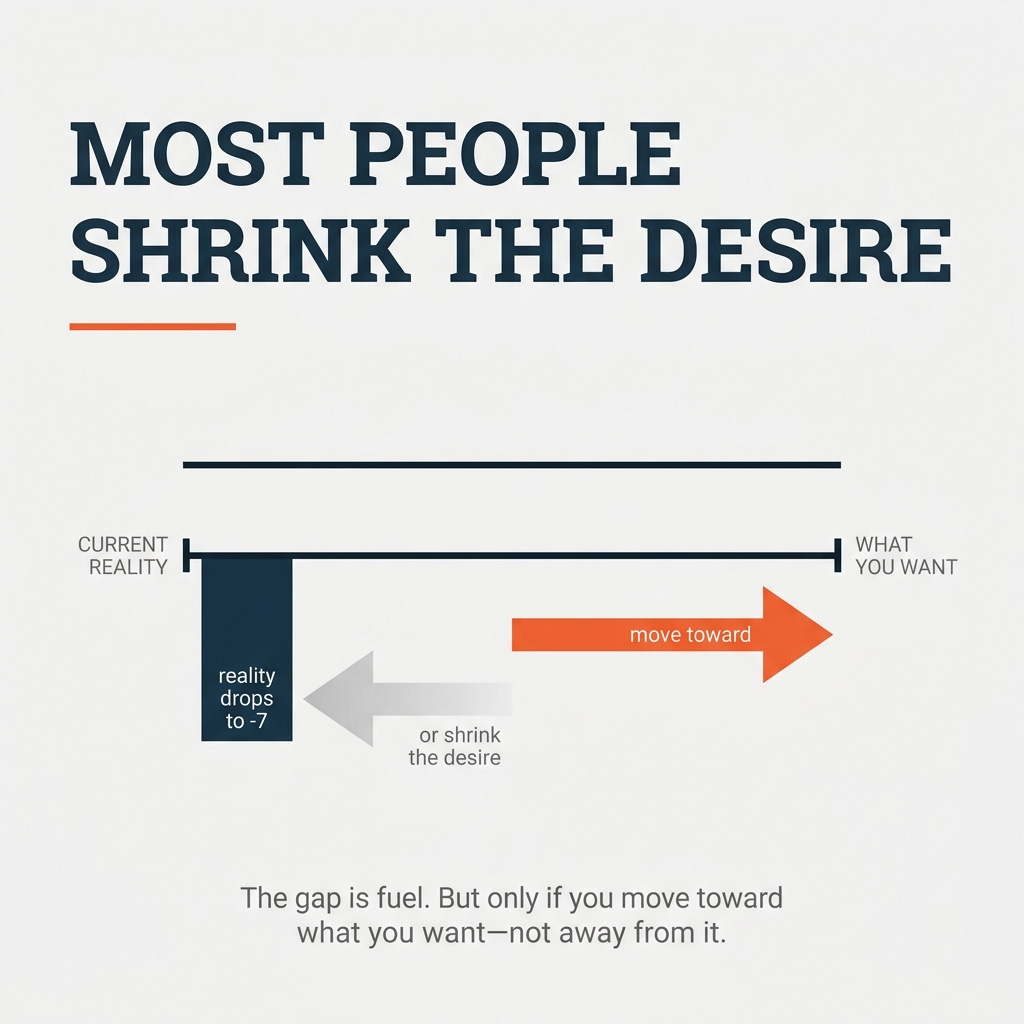
Know the moves but still not moving? That's the gap, not the knowledge. A strategy call turns it into a concrete next step for your situation — no pitch, you leave with the plan.
Hey,
You understand the sequence. Cash-flowing assets before the primary residence. Systems before scale. Income decoupled from your labor before anyone says the word retirement. The math works. The framework is sound.
So why aren't you moving?
It isn't knowledge and it isn't belief. It's the gap between where you are and what you want — and what most operators do with that gap is the quiet thing that keeps them stuck for years.
I've spent 15+ years in this space, trained more than 10,000 operators through CashFlowDiary, and recorded 237+ podcast episodes breaking down the deals that work and the ones that don't. The pattern below shows up in every cycle.
• • •
Why Understanding Doesn't Produce Movement
Most operators stall here — not because they don't believe it, and not because they're missing an ingredient. They stall because of what they do when the distance between their reality and their desire grows. That distance is supposed to drive action. The bigger the gap, the stronger the pull. But most people respond to a widening gap by shrinking the desire instead of moving toward it. They fail at the want before they ever fail at the goal.
Watch yourself do it in real time. The market gets noisy, a deal falls through, and within a week you've quietly rewritten the goal: maybe one property is enough, maybe now isn't the time, maybe this whole thing is for other people. None of those sentences feel like surrender. They feel like clarity. That's what makes the move so dangerous — it wears the costume of good judgment while it quietly walls you in.
How the Pain Gap Actually Works
Picture a horizontal line. Your current reality sits on the left. What you want sits on the right. The distance between them is pain — not metaphorical, operational. The kind that wakes you at 3am, or makes you miss your kid's recital because you need the paycheck.
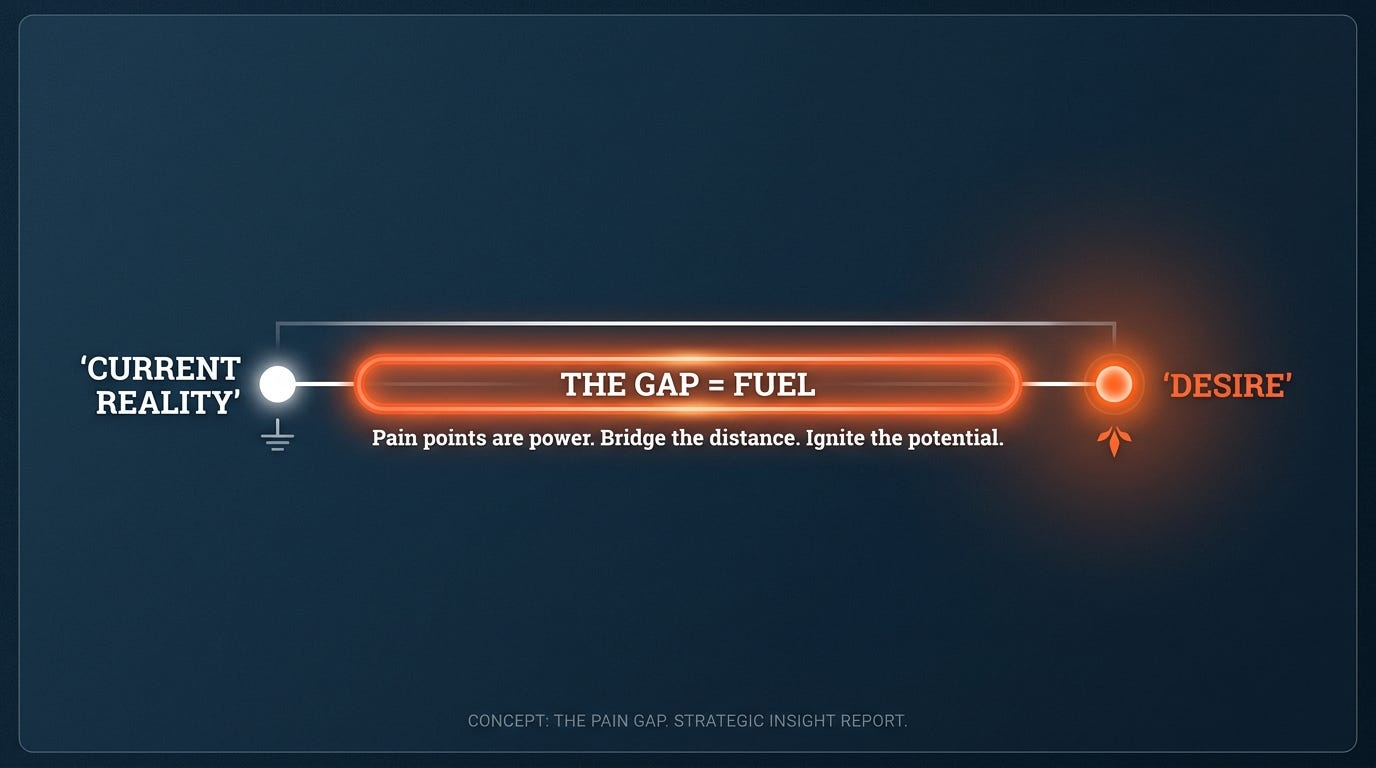
Lose a client. The furnace dies and the emergency fund is empty. Reality drops to −7 while the goal stays at +7, and now the gap is 14. The outcome didn't change — you still want the same thing — but the fuel just doubled. This is exactly where most operators make the move that kills them.
💡 Key reframe: A widening gap isn't a sign to want less. It's more fuel. The pain is information, not a verdict.
Two Responses to a Widening Gap
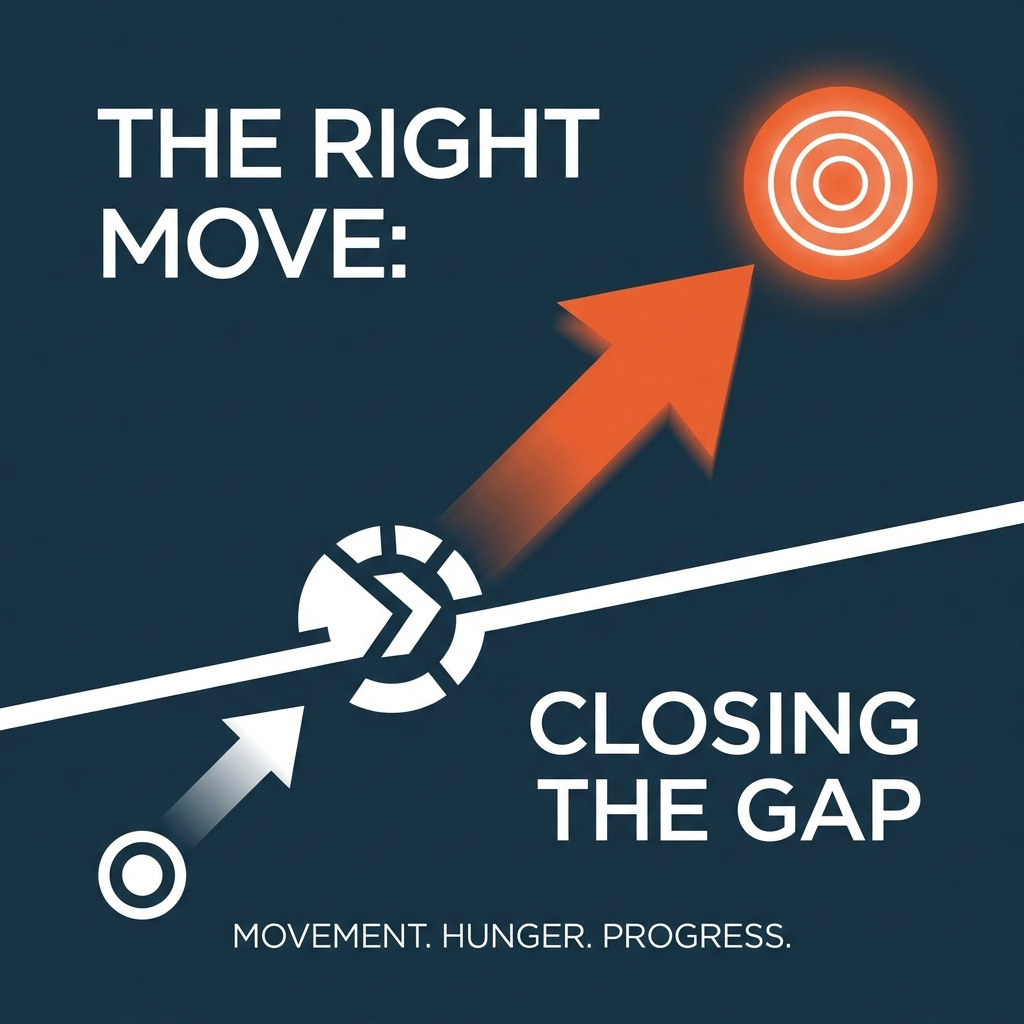
When the gap widens you get two options. Move toward the desire — take the first deal, build the first system, make the first video, because the pain of staying finally exceeds the fear of moving. That's hunger. Or move the goalpost — tell yourself you didn't want it anyway, that you're "being realistic," and shrink the desire until the gap closes and the pain stops. And you stay exactly where you are.
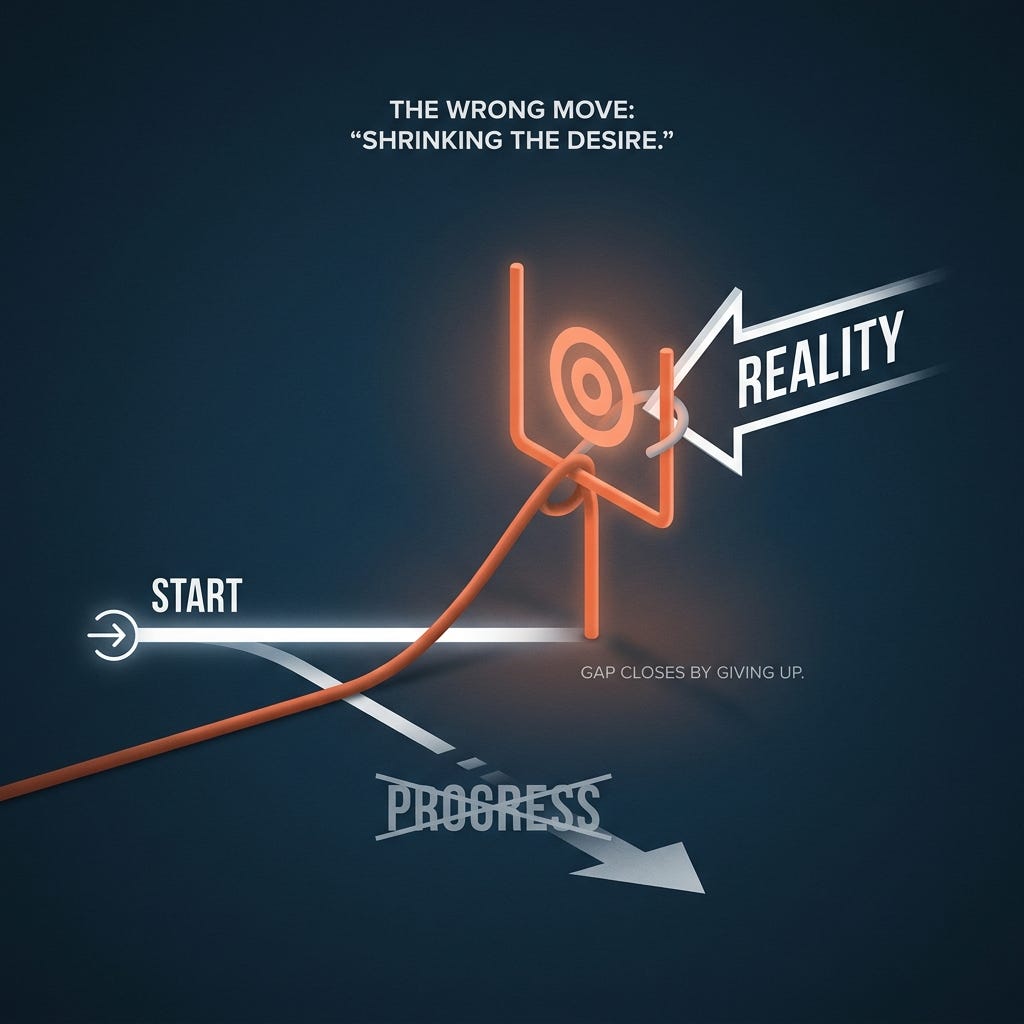
⚡ The trap operators miss: Lowering the desire feels like maturity. "I don't need a big house." "Time with my kids matters more." All true — but when you're using them to talk yourself out of what you wanted three months ago, that's not wisdom. It's comfort addiction.
The tell is the speed. Real reassessment is slow and evidence-based; you change the goal because you learned something specific. Comfort-driven shrinking is fast and emotional — it shows up the same week the pain spikes, and it always lands on the conclusion that requires nothing of you. When the new, smaller goal asks less of you than the old one did, that's not a strategy update. That's the gap closing the wrong way.
Hunger vs. Preference — and How to Manufacture the Gap
When you need to, you do. When you need to breathe, you fight for it. Need removes the question of circumstances. Most of what we say we want, we don't need — they're preferences, and preference waits for conditions to align. Preference doesn't close the gap.
Here's the question that cuts through it: how would it feel to earn exactly what you earn now, but without having to physically get up and go to work? Same dollars, different source. That reframe manufactures the gap without a crisis — you don't have to lose the job or hit rock bottom to see the distance. You just have to name it.
We get addicted to our comfort more than we want what we hope for in the future. — J. Massey
The gap is the fuel — but only if you move toward what you want instead of away from it.
The diagnostic — do this on paper today:
Draw the line. Horizontal, left to right.
Mark your reality. Where you are today — income source, liquidity, time, control. Not where you wish you were.
Mark your desire. What you actually wanted before you started lowering the bar. The unsanitized version.
Measure the gap, then check your direction. Are you moving toward the desire — or quietly moving the desire toward your reality?
Common Questions
How do I know if I'm being realistic or shrinking my desire? Ask whether the shift came from finding a better path or from not yet imagining one. Talking yourself out of what you wanted three months ago, with no structural reason, is shrinking.
What's the difference between hunger and preference? Hunger moves regardless of circumstances. Preference waits for the timing to be right. Most things we 'want' are preferences — and preference never closes the gap.
What if my reality gets worse while I'm working on it? That widens the gap and doubles the fuel. Same goal, more pressure. That's the moment you either move or shrink — choose movement.
Ready to close the gap instead of shrinking it?
If you can see the distance between where you are and what you want, you don't need more belief — you need the next concrete move. On a strategy call we map your reality, your real desire, and the first step that actually closes the gap.
• • •
Keep reading:
The Paycheck Trap

Half of Americans live paycheck to paycheck. It's not a money problem — it's a sequence problem.
P.S. Draw the line today. One sheet of paper: reality, desire, the gap. Then reply and tell me which direction you've been moving — I read every response.
CashFlowDiary — real numbers, real strategy, one shipped idea at a time.
Ready for the next step?