


Leaving your rate on autopilot is the most expensive thing you're not doing. A strategy call pressure-tests your pricing setup against your market in real numbers. No pitch — you leave knowing exactly where you're underpriced.
Hey,
Most new short-term-rental operators set a nightly rate and leave it there for months. It feels responsible. It's actually one of the costliest passive mistakes in the business.
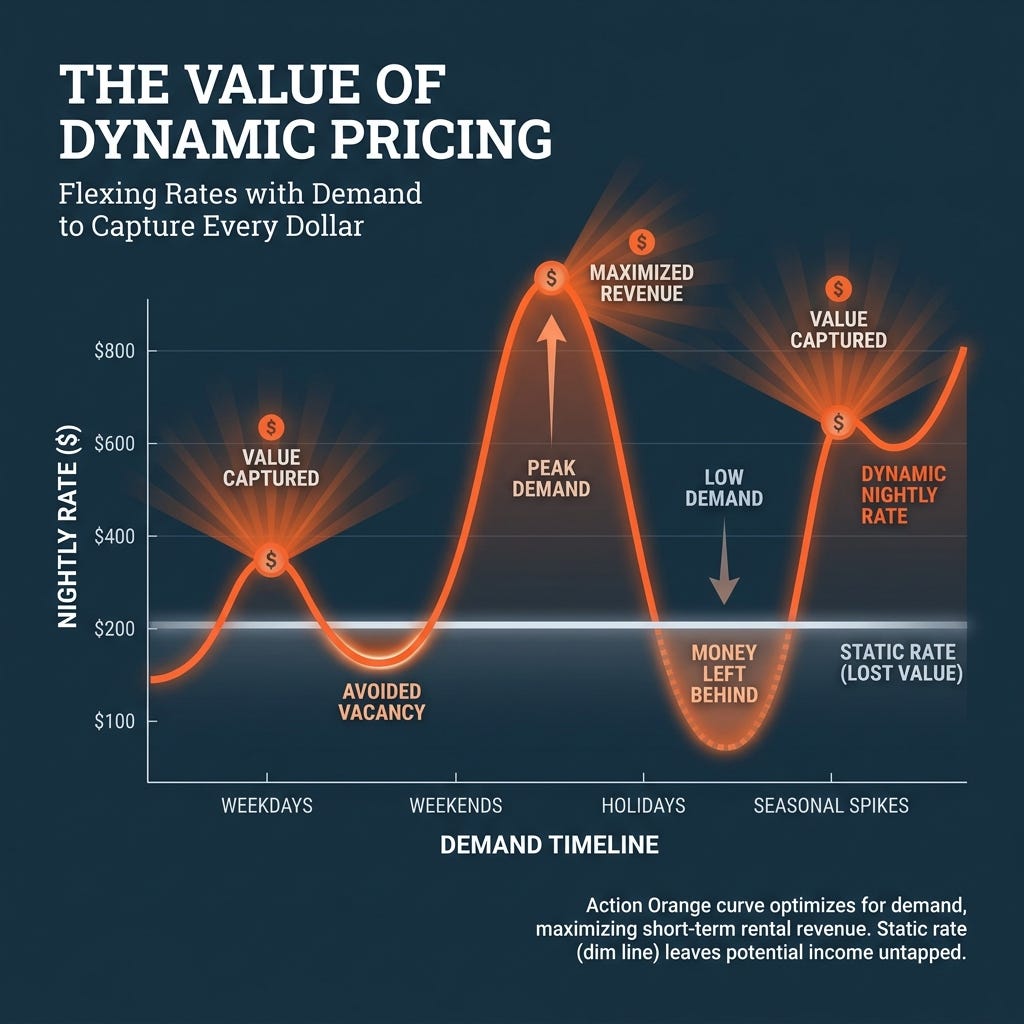
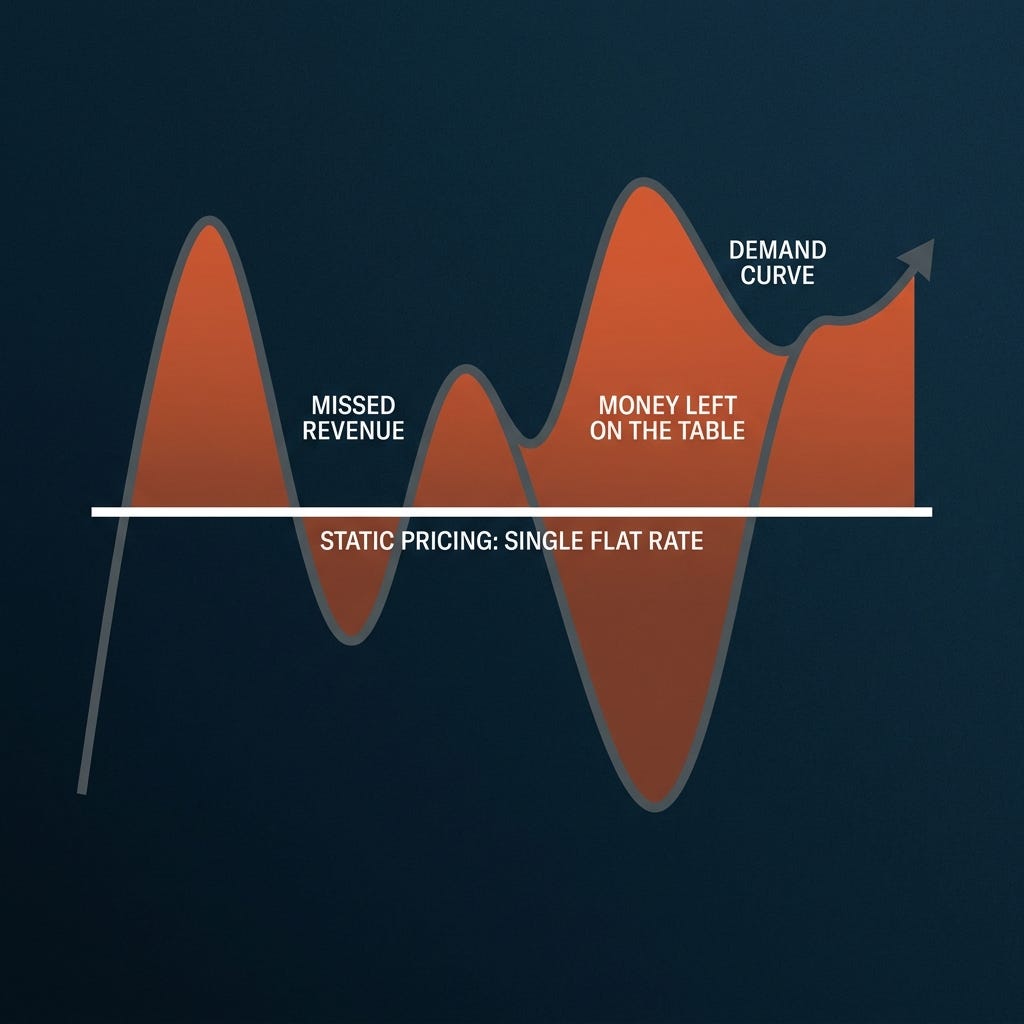
Demand for your property moves every single day — local events, competitor availability, how far out the booking window is, even quiet changes to the platform's algorithm. A static rate ignores all of it. You're not pricing your property; you're guessing once and hoping the market agrees for the rest of the year. It won't.
Think about what your calendar actually does over a year. There are weekends a local conference would have paid double for, and you charged your Tuesday rate. There are dead January weeks you could have filled at a discount, and you held firm and stayed empty. Every one of those is a small, invisible loss — and they compound into thousands of dollars a year that never show up as a problem, because an empty night and an underpriced night both just look like "business as usual."
I've spent 15+ years in this space, trained more than 10,000 operators through CashFlowDiary, and recorded 237+ podcast episodes breaking down the deals that work and the ones that don't. The pattern below shows up in every cycle.
• • •
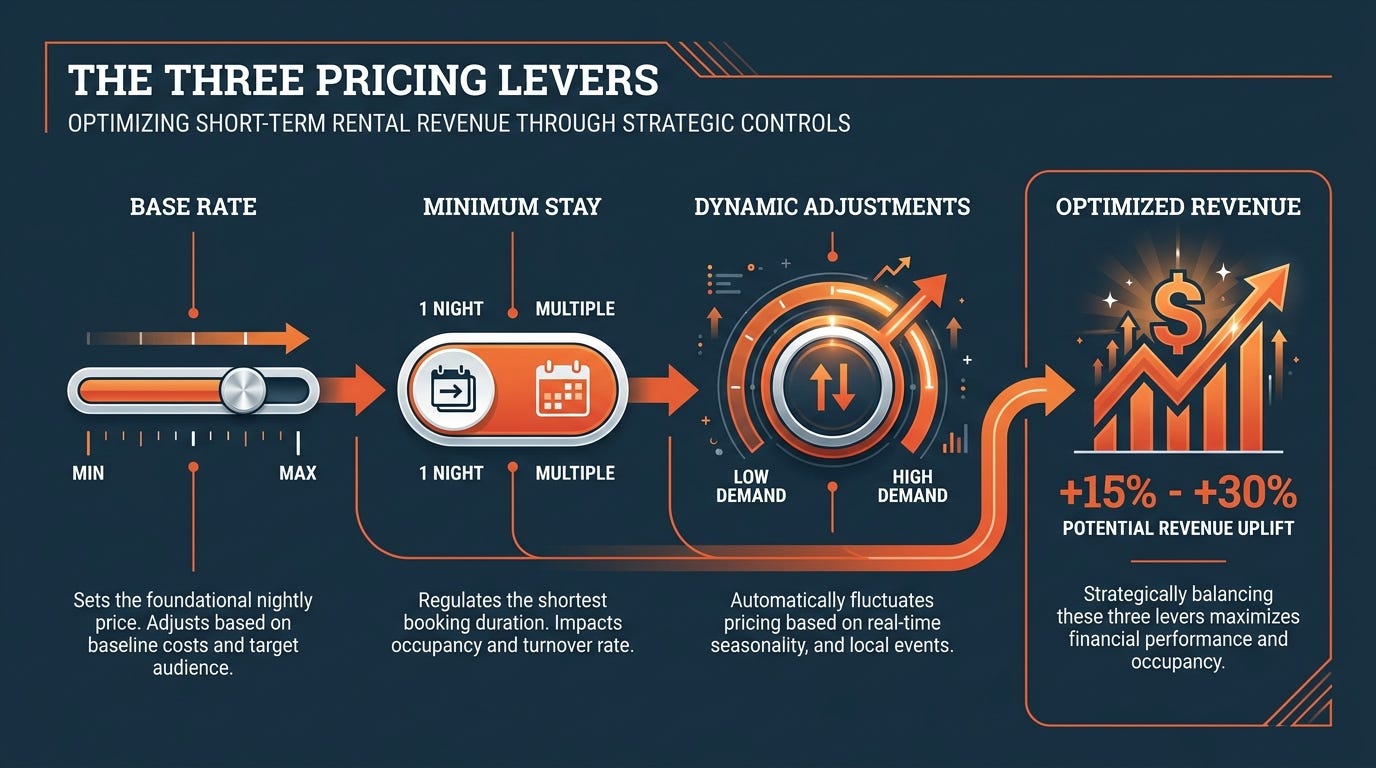
The Three Pricing Levers
Base rate. Your floor — the price at which a booking is still profitable in a slow period. The most common mistake is setting it too low, which trains the platform's algorithm to file your property under "budget" and serve it to bargain hunters. Your base rate is a positioning decision, not just a number.
This is the lever almost everyone underestimates. Price too low and you don't just lose margin on each booking — you teach the algorithm who your guest is. The platform starts showing your listing to people sorting by price, your reviews start reflecting bargain expectations, and you've quietly built a budget brand you then have to climb out of. The base rate is where your whole positioning starts.
Minimum-stay requirements. Varying minimum stay by day of week and season quietly reshapes both occupancy and booking quality. A 2-night minimum on weekdays and 3-night on weekends is a reasonable starting point for most markets — then you adjust around events and shoulder seasons.
Dynamic adjustments. This is where the revenue multiplier lives. Tools like PriceLabs, Wheelhouse, and Beyond make rule-based and algorithmic rate changes that respond to demand signals you would never catch adjusting prices by hand.
💡 Key reframe: A nightly rate isn't a setting you choose once. It's a signal you send the market every day. Static pricing sends the same signal in a market that never stops moving.
Which Tool — and the 30-Day Rule
The three tools each fit a different operator. PriceLabs is the most configurable and the preferred choice in the CFD community for people who want to understand and control their pricing logic. Wheelhouse suits operators who'd rather a more automated, hands-off setup. Beyond shines in markets with strong event-driven demand.
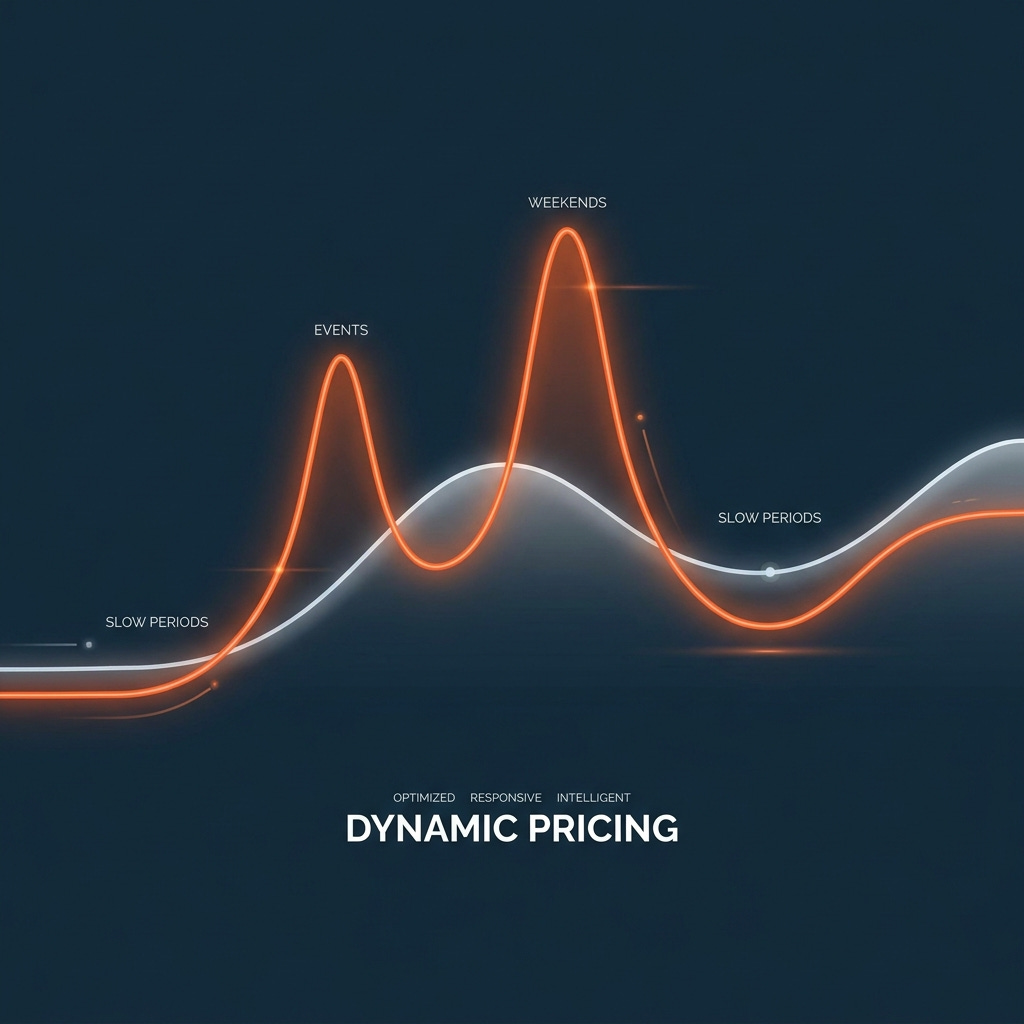
The fastest path to a revenue uplift is mechanical: install PriceLabs, set your base rate where the booking is genuinely profitable, turn on the market dashboard so you can see local demand patterns, and then leave it alone for 30 days. The algorithm needs data to optimize. Changing the settings every week resets the learning curve and guarantees mediocre output — the single most common way operators sabotage a tool that was about to start working.
⚡ The discipline operators skip: Set it, then stop touching it for 30 days. Fiddling weekly feels productive and quietly keeps the algorithm permanently stupid.
The Revenue Test
Here's how you know it's working. Ninety days after installing dynamic pricing, compare your Revenue Per Available Night (RevPAN) to your market average from AirDNA or Rabbu. At or above the market average for comparable properties? Your pricing system is doing its job. Below it? Don't blame the tool — review your base rate first. It's almost always set too low, dragging every downstream adjustment with it.
And keep the minimum-stay lever in the picture, because it quietly changes who books. A well-placed 3-night minimum on event weekends filters out the one-night party booking and protects your reviews; a relaxed 1-night minimum in a dead midweek stretch catches the traveling-nurse or business guest who just needs a place tonight. Price and minimum stay work together — tune them as a pair, not in isolation.
That's the part operators miss when they blame the software: dynamic pricing multiplies whatever foundation you give it. A strong base rate with smart minimums means the algorithm is optimizing a good business. A base rate set too low means it's optimizing a leak — efficiently filling your calendar at prices that were never going to get you where you want to go. Fix the foundation first, then let the tool do what it's good at.
A static rate isn't a price. It's a guess you stopped updating. — J. Massey
You're not pricing your property. You're sending the market a signal every day — make sure it's the right one.
Common Questions
Which dynamic pricing tool should I use? PriceLabs for control and configurability (the CFD default), Wheelhouse for hands-off automation, Beyond for event-heavy markets. All three beat pricing by hand.
Why shouldn't I adjust settings often? The algorithm optimizes on accumulated data. Changing settings weekly restarts that learning and keeps results mediocre. Set it well, then leave it 30 days.
How do I know my pricing is working? Compare your RevPAN to your market average (AirDNA or Rabbu) at the 90-day mark. Below market usually means your base rate is too low — fix that before anything else.
Ready to stop leaving money on the table?
If your rate has sat unchanged for weeks, you're almost certainly underpriced into peaks and overpriced into the slow nights you could have filled. On a strategy call we'll look at your base rate, your tool setup, and your RevPAN against the market, and find exactly where the revenue is leaking.
• • •
Keep reading:
World Cup 2026: Most Operators Priced With Pride, Not Math

Across 16 host cities, asking rates ran $497 a night while guests booked at $332. Here's what the booked data actually rewarded.
P.S. When did you last change your nightly rate? If the honest answer is "I can't remember," reply and tell me — that's usually the most expensive sentence in an operator's business.
CashFlowDiary — real numbers, real strategy, one shipped idea at a time.
Ready for the next step?