


I've been watching this legislation move through Missouri for about six weeks, and the response from the STR community has been almost entirely predictable: outrage, petitions, lobby days. All valid. Some of it will work.
But there's a question nobody's raising — and I want to put it in front of you before the tax cycle closes.
What Just Happened
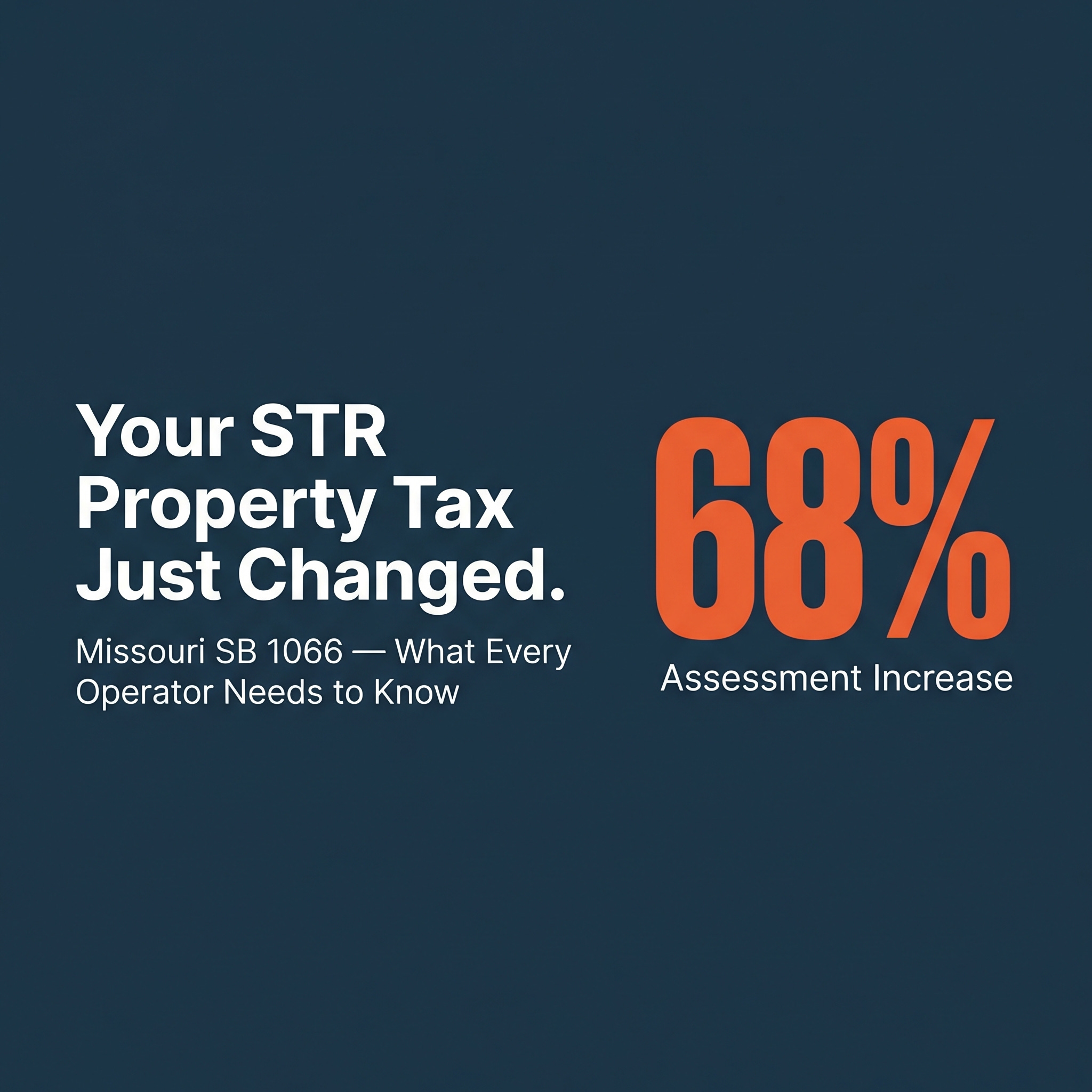
Missouri's SB 1066 passed the Senate 30-3 on March 25, 2026. The House companion bill followed April 2. The legislation reclassifies short-term rental properties from residential (assessed at 19% of appraised value) to commercial (assessed at 32%). That's a 68% jump in your assessment ratio — before anyone applies a millage rate on top.
💡 The math: Missouri uses assessment ratios — residential = 19%, commercial = 32%. On a $400,000 STR: residential assessment is $76,000 vs. commercial $128,000. That's a 68% jump in assessed value before mill rates even apply. Stress-test every open deal at the commercial rate before your county makes the call for you.
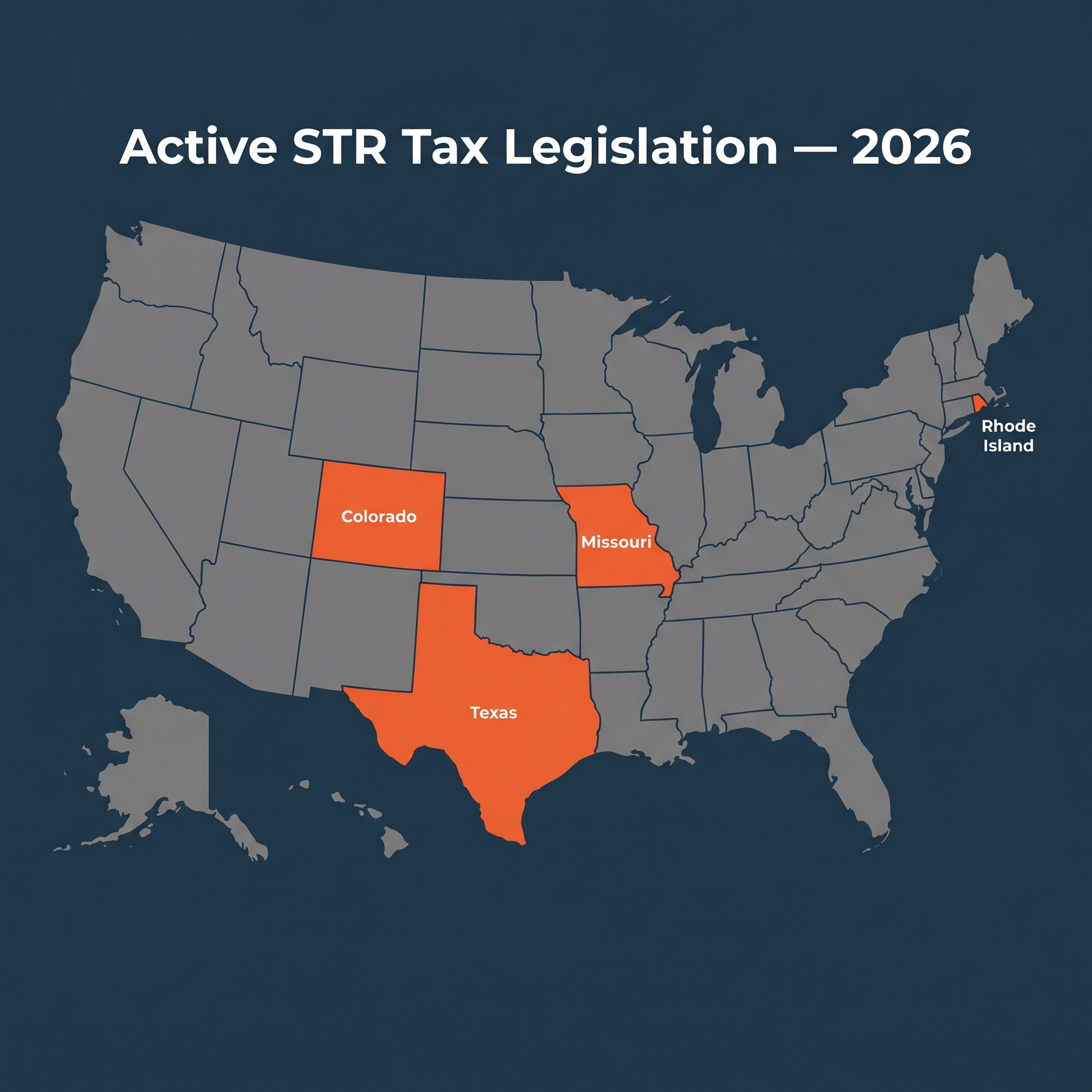
This isn't a local story. Rhode Island already moved on this. Colorado and Texas have active legislation in play right now. Missouri is just the loudest case moving through a state legislature today.
The Question Nobody Is Asking
Here's where most of the conversation stops: outrage, lobbying, fighting the bill. That work matters. Tyann Marcink Hammond, President of the Missouri Vacation Home Alliance, has been leading the charge at the state level — calling these bills "a direct attack on the small business owners and families who have built their livelihoods around short-term rentals."
She's right. And you should support that fight.
But while you're fighting it, ask a different question.
If your property gets reclassified as commercial, what does that unlock? Commercial zoning often allows higher density on the same parcel. It changes negotiations with your insurance carrier, your lender, and your municipality. Economic development programs closed to residential operators sometimes open up. These aren't always worth more than the tax hit — but you need to know the full picture before you decide your only play is to resist.
"The operators who win from this situation are the ones who stress-tested their deals at the commercial rate before they closed."
Three Things to Do Before Your Next Tax Cycle
These apply whether you're in Missouri or not.
1. Pull your current property classification and verify it. In many counties, STR operators are already being assessed differently than traditional residential owners and don't know it because no one sent a notice.
2. Get a contingency-based property tax consultant in every market now — before the bill arrives. These professionals work on a percentage of what they save you. No savings, no fee. They know which assessors are aggressive, which counties have formal appeal windows, and where the comparable sales evidence is strongest. This is a standing relationship, not a one-time call.
3. Stress-test every open deal at the 32% commercial rate. If the numbers still work, you have a margin of safety. If they only work at 19%, that deal was always more fragile than it looked.
Here's what I know from 10+ years in this space: the operators who survive regulatory shifts aren't the ones who saw them coming. They're the ones who had their systems in place before it mattered.
If you're in an affected market — reply and tell me where you're at. Are you in the middle of an appeal? Still underwriting new deals? Just hearing about SB 1066 for the first time? I read every reply, and I'm building a resource specifically for operators navigating tax reclassification this year.
More on that soon.
— J.