


Hey,
The 2026 World Cup runs June 11 through July 19 across 11 US host cities. If you operate a short-term rental in one of those markets, you're in the middle of a real-time stress test right now — whether you signed up for one or not.
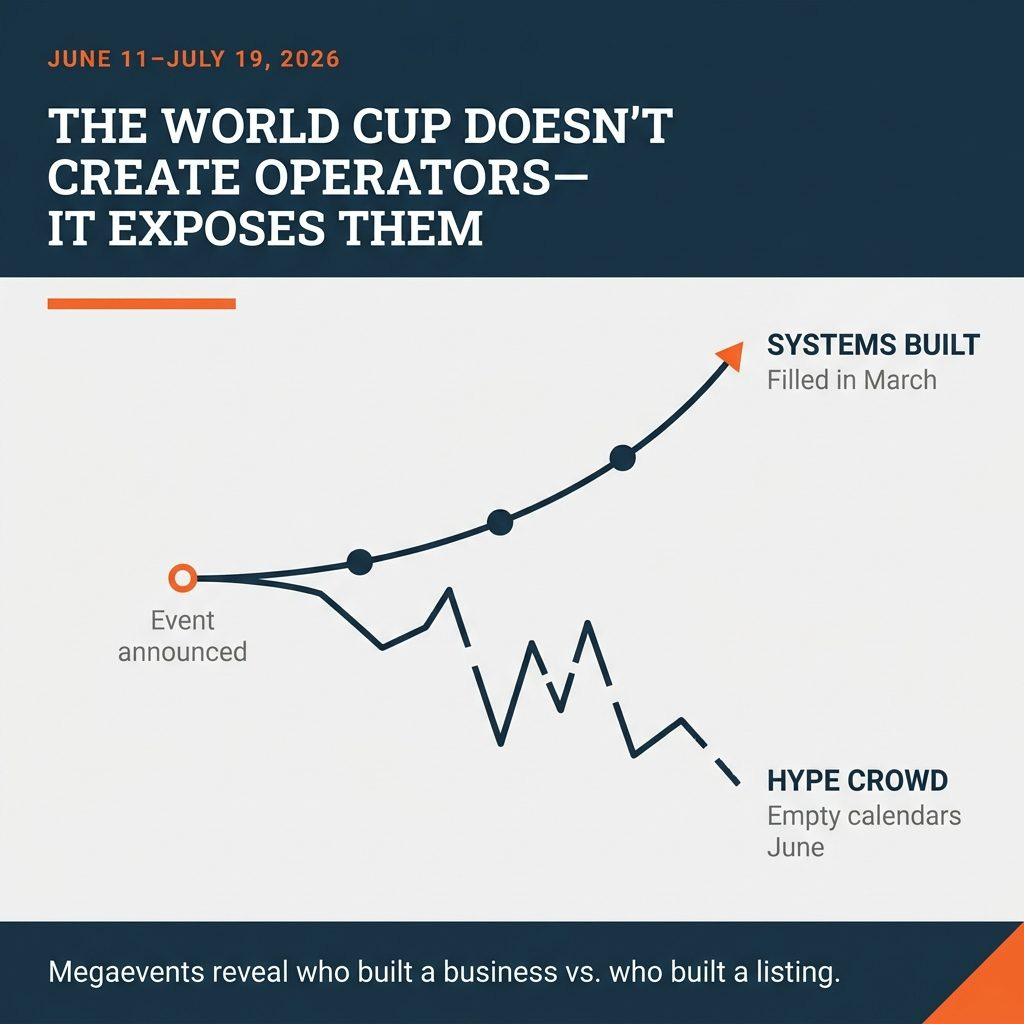
Here's the thing most operators get wrong about it: the World Cup isn't creating opportunity. It's exposing who built a business and who built a listing. The hype crowd and the disciplined operator are running the exact same event window. The outcomes are splitting hard, and the gap has never been more visible.
I've watched this pattern across Super Bowls, F1 races, and now the World Cup. The lesson is always the same. Let me show you where it's landing.
J. Massey is a short-term rental operator and the founder of CashFlowDiary. He has trained more than 10,000 entrepreneurs in STR operations and rental arbitrage, and reaches 19,000+ subscribers through the CFD newsletter.
Megaevents don't create operators. They expose them.
Filling a calendar during a megaevent is table stakes. The real test is whether your pricing discipline, your guest systems, and your compliance posture hold up under compression — without you manually running every piece at 2 a.m.
The gap shows up in three places: pricing, operations, and compliance. Operators who built systems in March are printing cash. Operators who set pride-based rates in May are watching empty dates bleed revenue.
If your systems break under World Cup volume, they'll break under F1, the Super Bowl, and every other surge. The event isn't the opportunity. It's the diagnostic.
Where the hype crowd is bleeding revenue
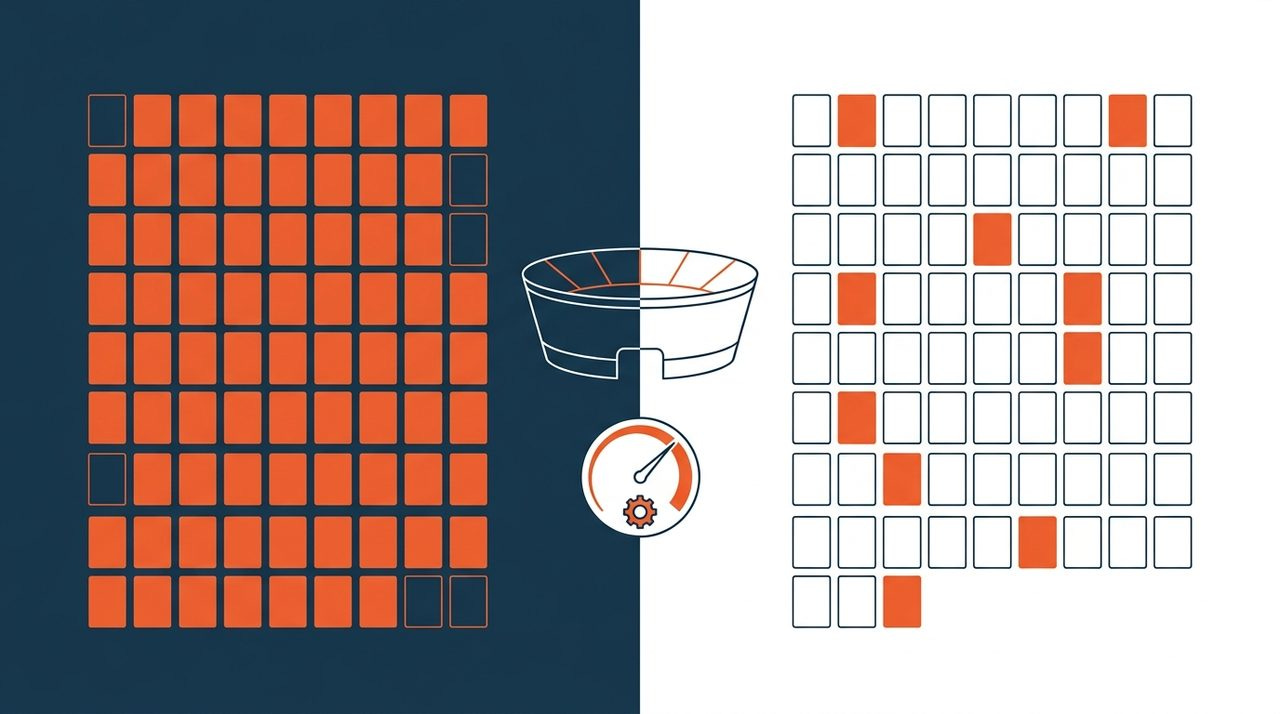
The mistakes are consistent every time. Operators saw the FIFA hotel-block news and priced with pride instead of math — rates set at 3x to 5x base, no comp analysis, no demand curve, no minimum-stay logic. Then they watched the compression window pass with the calendar empty.
Here's what they missed: travelers planning an international World Cup trip don't book in June. They booked in February, March, and April. The operator who set a $1,200/night rate in May is staring at empty dates while the operator who priced at $650/night filled months ago.
That's the pricing half. The operational half is just as brutal. Operators who never built guest-communication systems are now hand-answering every inquiry during surge volume. At two properties, a manual system keeps up. At five properties when inquiry volume triples, it breaks. The volume didn't create the problem — it exposed it.
And the operators who skipped compliance because "everyone's doing it"? Some markets proved that bet wrong. Properties pulled offline, fines issued, guests relocated at the operator's expense — right in the middle of the event.
What the disciplined operators did instead
The operators whose calendars filled early made different choices months ago.
They read demand before setting rates. Pulled comp data, tracked booking pace, watched what was converting at each price point. They scored on RevPAR, not occupancy alone — because a property at 85% occupancy and $650/night beats a property at 40% occupancy waiting for someone to pay $1,200. The math is simple. The discipline is rare.
They built guest systems before the surge. Automated check-in sequences, staged house rules, day-of communication that fires without the operator remembering to send it. The operators running clean right now aren't manually texting check-in instructions to 47 guests. The system handles it.
They stayed legal. Verified permits before listing, confirmed platform compliance, didn't cut corners because the event was big. Cities raise enforcement when attention is high — and that's exactly when shortcuts surface.
💡 RevPAR, not occupancy, is the scorecard. A full calendar three months out at a fair rate beats an empty calendar two weeks out at a rate you bragged about.
Build for the calendar, not the cup
The World Cup ends July 19. The calendar doesn't stop. F1 comes to Austin on October 23–25 and Las Vegas on November 19–21. The LA Olympics land in 2028. The Super Bowl rotates every year. Conferences, championships, festivals — the calendar is full of compression windows.
The operators who win aren't scrambling for this one event. They built systems that perform on any event. Every megaevent is a rehearsal for the next one, and the skills compound: demand reading, pricing discipline, guest automation, compliance verification.
⚡ Treat the World Cup as a one-time windfall and you'll scramble again in October. Treat it as a systems-validation exercise and you'll be ready when F1 Austin arrives.
This is exactly why we start operators on rental arbitrage before they buy. You learn the operational systems on someone else's balance sheet. By the time you're acquiring door three, the guest flows are built, the pricing discipline is trained, and the compliance checklist is already running.
What to do with what you're seeing this week
The event handed you live data either way. Use it:
If your calendar filled and your systems ran clean — document it. Write down what you priced, what you automated, what your booking pace looked like, and which compliance steps you verified. That's your playbook for the next event.
If your calendar has gaps — don't rationalize it. The gaps are the data, not the market's fault.
Name what broke. Pricing, systems, or compliance — it's almost always one of the three.
Fill the dates you still can. If there's runway left in the window, drop the rate and capture the booking instead of protecting a number.
Fix the sequence before F1. Austin is four months out. That's enough time to build the systems — if you start now.
The teams leave July 19. The operators who built systems are still booked in August.
Want a second set of eyes on your operation before the next event window? Book a free STR diagnostic → — we'll look at what's working, what's creating friction, and map the systems you need before F1.
P.S. — Every compression window teaches the same lesson. The operators who write it down are the ones who stop relearning it.
Last updated June 25, 2026 · CashFlowDiary — the systems, in real time.
Spot on.