


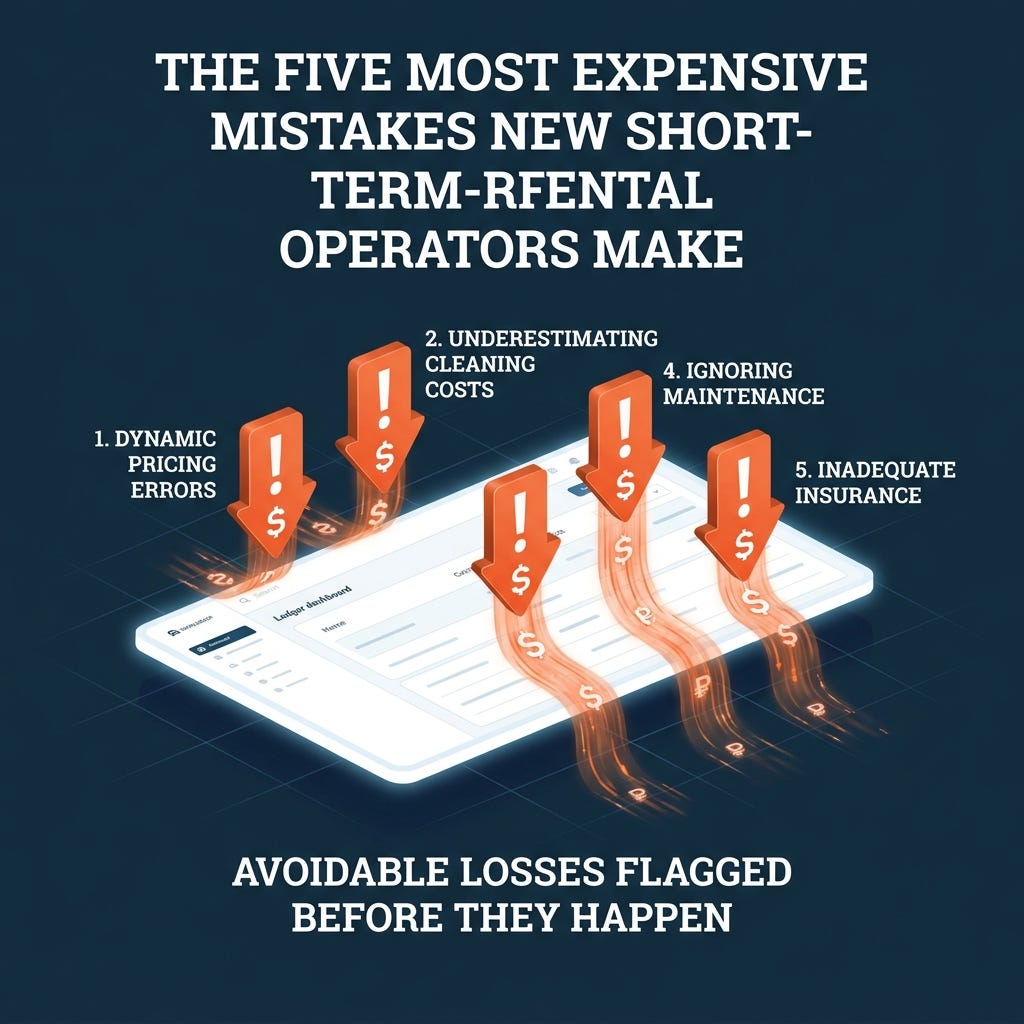
Want a second set of eyes before you make one of these? A strategy call catches the expensive mistakes before they cost you — regulations, insurance, pricing, the real P&L. No pitch, you leave with a checklist.
Hey,
Over a decade of consulting with thousands of short-term-rental operators, the same handful of mistakes keep showing up. They're not exotic or unpredictable. They're consistent, identifiable, and — this is the important part — entirely avoidable if you know about them before you commit.
Here are the five that cost new operators the most money, and the specific decision that prevents each one.
I've spent 15+ years in this space, trained more than 10,000 operators through CashFlowDiary, and recorded 237+ podcast episodes breaking down the deals that work and the ones that don't. The pattern below shows up in every cycle.
• • •
Mistakes 1 & 2: Regulations and Platform Dependence
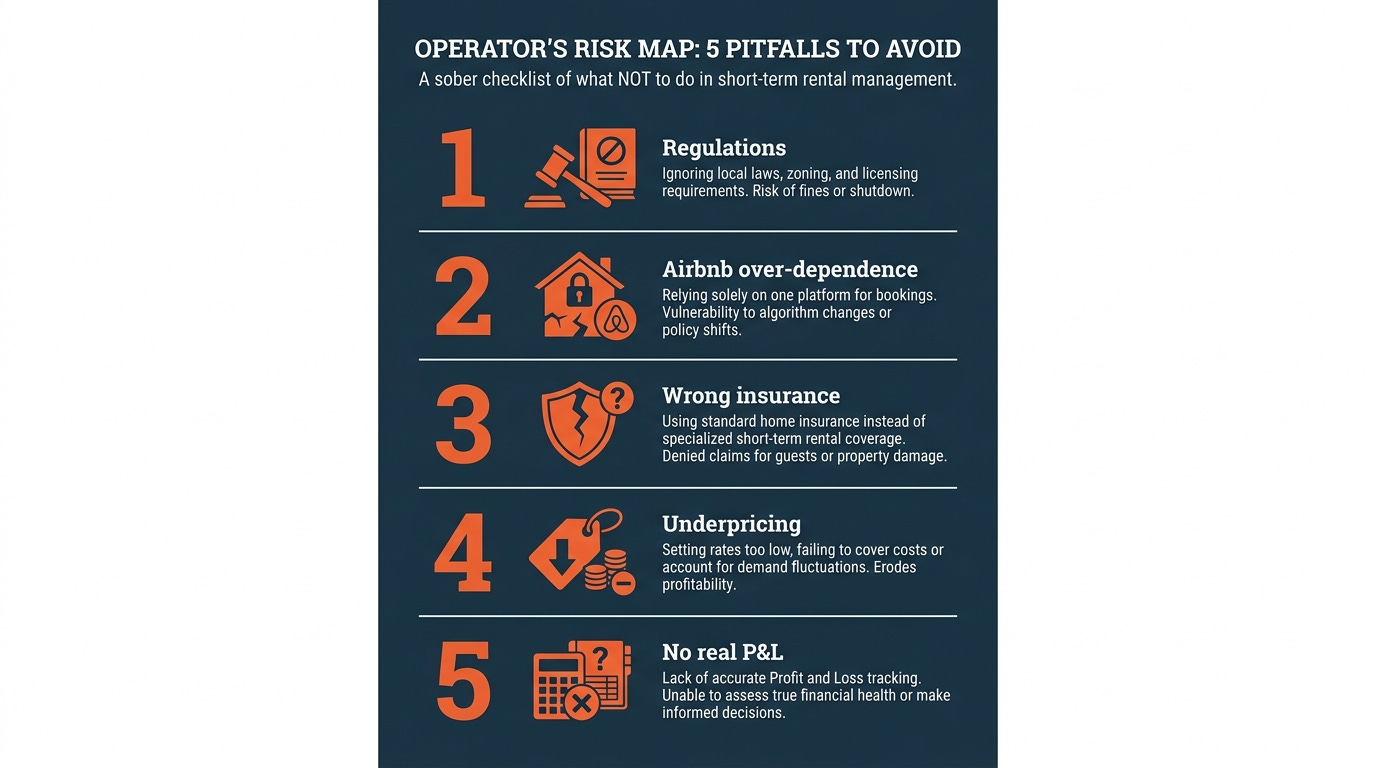
Mistake #1 — Under-researching the regulatory environment. Operators commit to a market, set up a property, and then discover STR permits have a waiting list or a hard cap. This has played out in dozens of markets over the past five years. Regulatory research isn't optional or a later step — it's the very first move before any market commitment. Check the municipal code, county rules, and HOA covenants, and call the planning department before you sign anything.
Mistake #2 — Optimizing for Airbnb at the expense of direct bookings. Airbnb typically takes around 3% from the host and roughly 14-15% from the guest. Lean 100% on Airbnb and the platform is skimming a high-teens percentage of every booking dollar in play. Building even a 10-15% direct-booking channel over two or three years saves real money every year — and gives you somewhere to stand if platform policies change overnight.
💡 Key reframe: The platform is a customer-acquisition channel you rent, not a business you own. Renting 100% of your demand from one landlord is a single point of failure.
Here's how that failure actually lands. A platform tweaks its cancellation policy, changes how payouts release, or adjusts the search algorithm, and an operator who gets 100% of their bookings there wakes up to a different business than the one they went to sleep with. The direct-booking channel isn't about saving the fee, though it does. It's about owning a relationship with past guests you can reach without asking permission. Even a small repeat-and-referral list is insurance you can't buy after you need it.
Mistakes 3 & 4: Insurance and Underpricing
Mistake #3 — Using personal insurance for an STR. Standard homeowner's or renter's policies explicitly exclude commercial short-term-rental activity. If a guest is injured and your insurer discovers you were operating an STR, they can deny the claim outright. STR-specific policies from companies like Proper Insurance or Steadily aren't optional — they're the cost of being in the business.
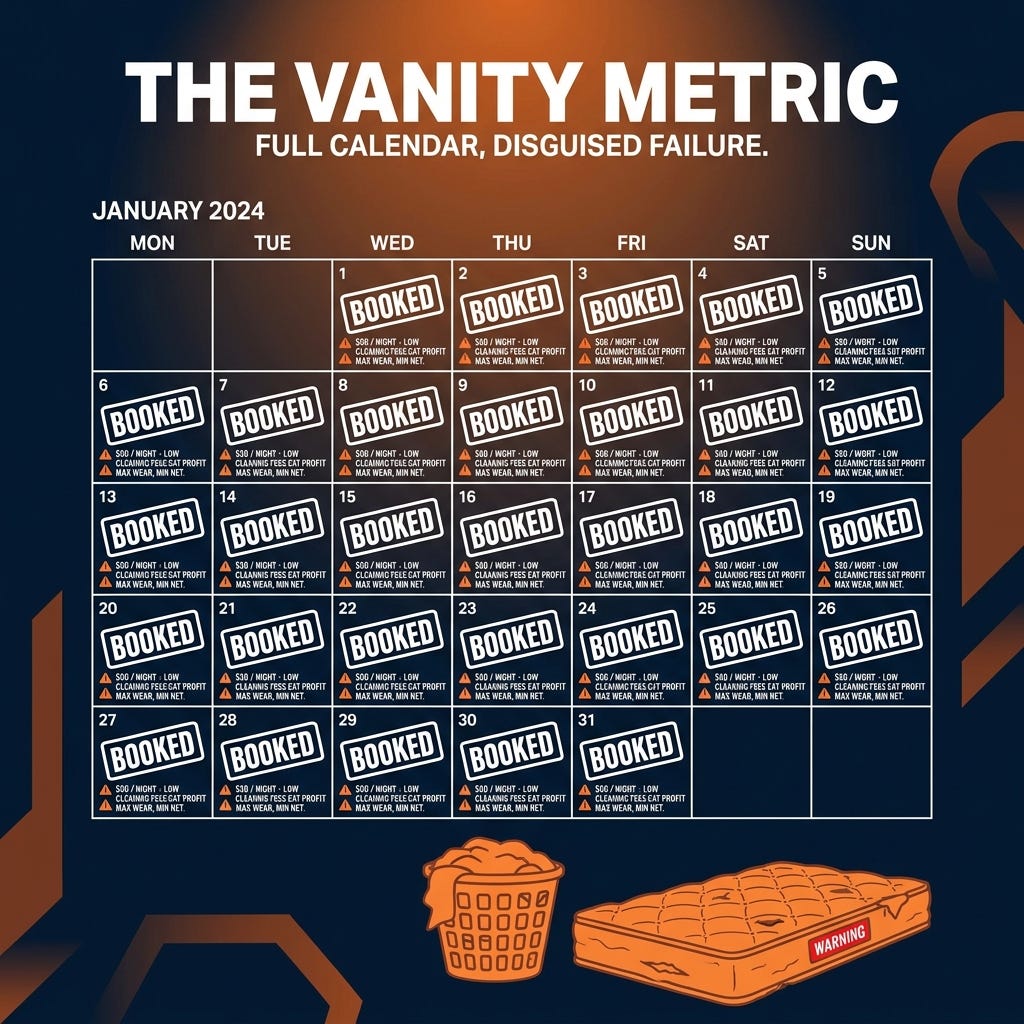
Mistake #4 — Underpricing to "fill the calendar." A full calendar at the wrong price isn't success — it's disguised failure. 100% occupancy at $89 a night is often worse than 65% occupancy at $139, and the full calendar comes with maximum wear, maximum cleaning cost, and maximum chances for something to go wrong. Occupancy is an ego metric. Net income is the one that pays you.
Underpricing also does quiet long-term damage. Cheap guests are, on average, harder guests: more wear, more complaints, more one-night chaos. Every one of those stays generates a review and a rating that the algorithm reads as "this is what this property is." You don't just lose margin on the discounted night — you train the market to expect the discount, and you spend the next year trying to convince it you're worth more. Price is a story you tell about your property, and the budget story is the hardest one to rewrite.
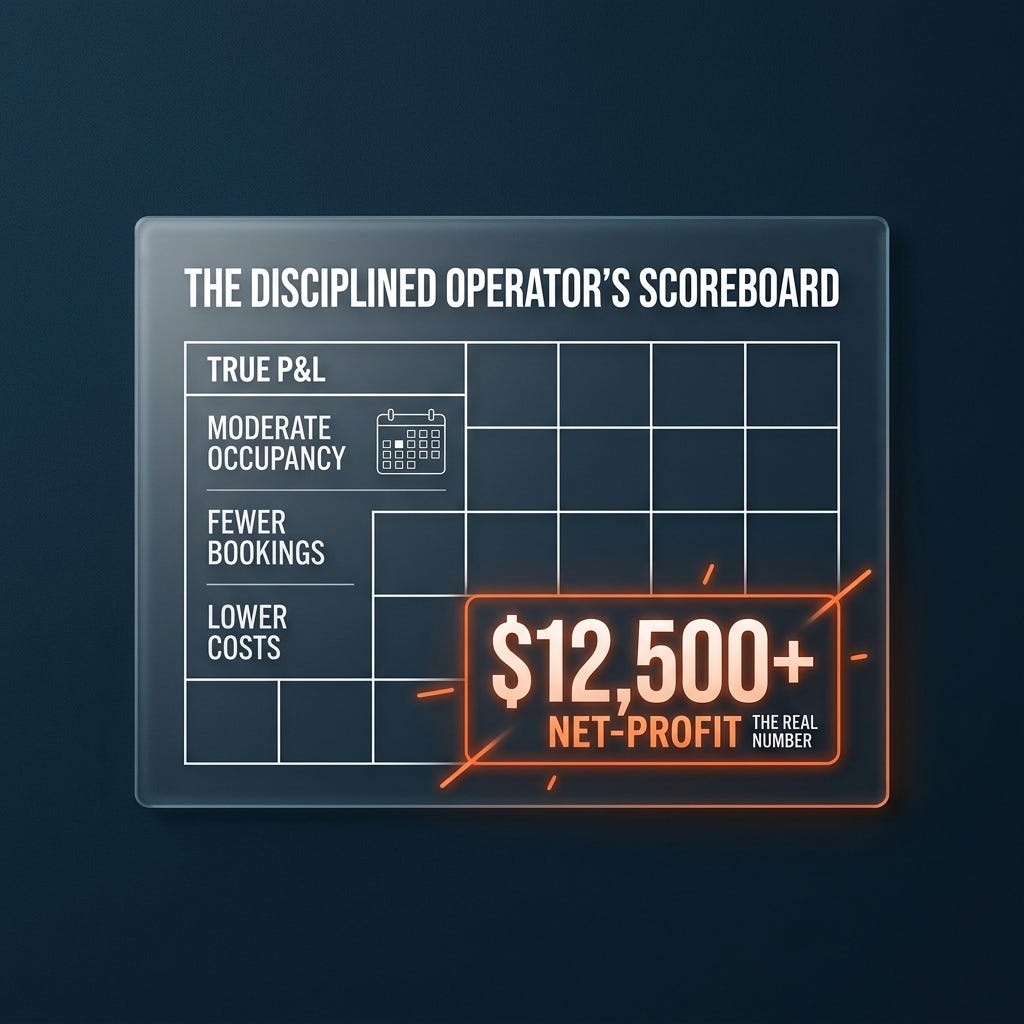
⚡ The math operators skip: 65% occupancy at $139 beats 100% at $89 on net income — with a fraction of the cleaning, wear, and guest volume. Chase profit, not a full calendar.
Mistake 5: Not Tracking the Real Numbers
Gross revenue is a vanity metric. Most new operators track their platform payouts without ever building a true P&L — one that includes cleaning, platform fees, supplies and consumables, minor maintenance, software subscriptions, and the pro-rated cost of replacing a major appliance. Real profitability is typically a quarter to a third lower than gross revenue for a well-run operation. If you don't know your real number, you can't tell which unit is carrying the business and which one is quietly bleeding — and you definitely shouldn't add a second.
The fix is unglamorous and it works: build a real P&L before you scale, not after. List every cost — cleaning, fees, supplies, restocking, minor repairs, software, and a monthly set-aside for the water heater and the HVAC that will eventually fail. Subtract it from your actual payouts, not your gross bookings. The number that's left is the only one that tells you whether unit one has earned the right to become unit two. Operators who scale on gross revenue find the holes during a slow month. Operators who scale on net never get surprised.
A full calendar at the wrong price is not success. It's disguised failure. — J. Massey
None of these five are bad luck. They're decisions made without the right information — which means every one of them is preventable.
Common Questions
What's the very first step in a new market? Regulatory research — permits, caps, primary-residence rules, zoning. Call the planning department before you write an offer. This single check prevents the most expensive mistake on the list.
Do I really need STR-specific insurance? Yes. Personal homeowner/renter policies exclude commercial STR activity and can deny a guest-injury claim. Proper Insurance and Steadily are built for this.
Isn't a full calendar always good? No. 100% at a low rate often nets less than 65% at a higher rate, with far more wear and cost. Track net income, not occupancy.
Ready to skip the expensive lessons?
Every one of these five is cheaper to avoid than to fix. On a strategy call we'll pressure-test your market's regulations, your insurance, your pricing, and your real P&L — so you spend your money on growth instead of on lessons you didn't need to learn.
• • •
Keep reading:

P.S. Which of the five are you most exposed to right now? Reply with the number — most operators already know, and naming it is the first step to fixing it.
CashFlowDiary — real numbers, real strategy, one shipped idea at a time.
Ready for the next step?