


Somebody told you short-term rentals are passive income. Whoever said it never managed one.
On Tuesday, August 18 I'm showing the fix live and free with the Wealth Without Wall Street team. Register and my Rental Readiness Score is yours — no pitch from the stage.

Hey,
Yesterday I showed you a receipt: $1,914 booked, $267.38 gone to fees before the guest touched the door.1
Today I want to show you where the rest goes. Fees are only one of three holes in the boat.
“Passive income” is the phrase that sells short-term rentals. Managing one teaches you the truth: left alone, it's a job that pays a little worse every quarter.
Pricing moves nightly. Guests need answers at 11 pm. The platforms take a bigger bite every year. None of that pauses because you bought the property with “passive” in mind.
This lands differently depending on where you sit. Maybe you're researching your first property. Maybe you're running one and the math feels off. Maybe you've scaled and the drowning already started.
Same three leaks, all three rooms. Only the size of the numbers changes.
I've spent 15+ years in this space, trained more than 10,000 operators through CashFlowDiary, and recorded 237+ podcast episodes. Every underperforming property I've audited leaks from the same three places.
• • •
Leak 1 — pricing that never moves
Your market reprices itself every night. Comp sets shift, events land, seasons turn — and a flat nightly rate ignores all of it.
The miss cuts both ways. Weekends priced under the market give money away. Tuesdays priced over it sit empty.
Run the small version of the math: a $50-a-night miss across 20 booked nights is $1,000 a month. From this leak alone, on one door.
Hotels have priced dynamically for decades, and the booking platforms run that same math against you every single day. A flat rate means you're the only party at the table not doing it.
When operators fix this leak first, it's usually the fastest money they recover. No renovation, no new furniture, no re-listing — the rate simply starts reading the market.
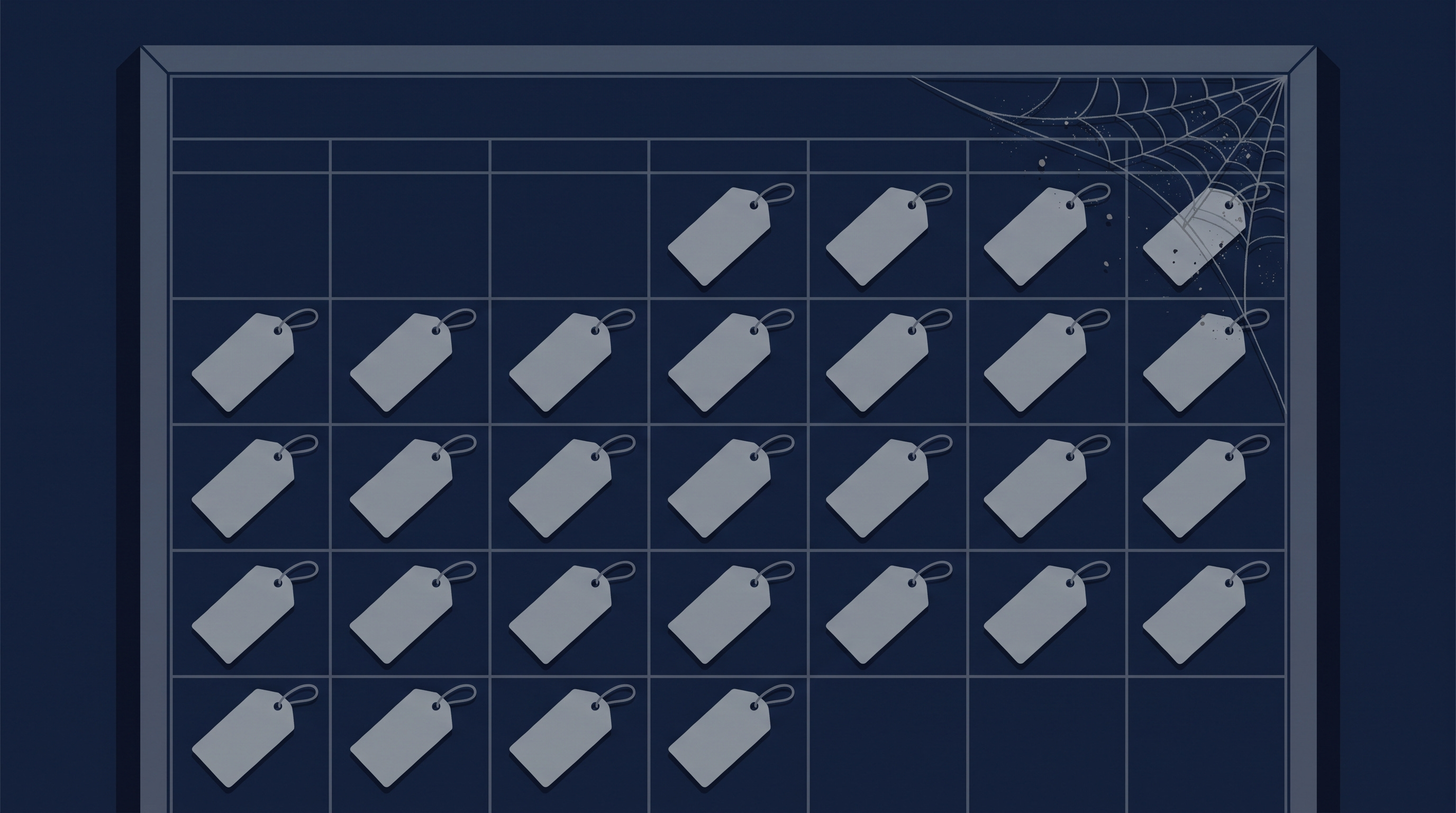
The rate that never moves.

The rate that reads the market.
Leak 2 — guest operations you never invoice
It's 11 pm and the phone buzzes. Door code. Wifi password. “Is early check-in possible?”
Each answer costs minutes. The pattern costs your evenings. At 10 to 15 hours a week, “passive” is a part-time job with no paycheck attached.

The shift nobody schedules.
None of those hours show up on a P&L, so nobody counts them. Count them anyway — your real hourly rate is part of your real number.
And unpaid hours compound. Burnout is what happens when a business that was supposed to buy your time back quietly starts spending it.
Write down one week of it: every guest text, every review reply, every “quick” calendar fix. Multiply the hours by what you bill for your day job — that number belongs in your books.
“Passive isn't a promise. It's a design decision.”
— what I tell every operator still answering guest texts at midnight
Leak 3 — the fee stack nobody totals
This is the $267.38 category: platform fees, processing fees, channel markups, plus the stack of subscriptions duct-taping the operation together.
Each line looks small on its own. Together they routinely take 15 to 25 percent of gross before you've paid a single real expense.
None of these fees are evil, and some buy real value. The problem is that nobody watches the total — and the total is where a door slides from profitable to breakeven.
Pull one month of statements and total every line that isn't mortgage, cleaning, or supplies. Most operators have never done it once. The ones who do rarely forget the number.
⚡ The math operators skip: add the three leaks on a $4,000-a-month door and $700 to $1,200 walks out every month. That's $8,400 to $14,400 a year — per property.
Plugging the leaks without hiring a team
Three leaks sound like three jobs. They're actually one system with three parts — and AI runs most of it.
I run my properties on KNOW, DO, TRACK. Each part closes one leak.
KNOW. AI reads your market daily — comp rates, demand shifts, event spikes — so pricing moves before the weekend arrives. That's leak 1 closed.
DO. 80 percent of guest messages repeat. Automate the repeatable answers and the 11 pm shift disappears. Leak 2.
TRACK. One weekly report shows net per door after fees and hours. When the fee stack creeps, you catch it in days instead of quarters. Leak 3.
💡 Key reframe: the point isn't more software. It's a system that runs without running you.
None of this requires a ten-tool stack or a full-time hire. It requires knowing which leak is biggest on your property and fixing that one first.
This is the exact build I'm presenting live on Tuesday, August 18 at the Cash Flow Wall Street Can't Touch masterclass — all three leaks, found and plugged on a real property, receipts on screen.2
Keep reading:
What's the Real Number?

One $1,914 reservation. $267.38 gone before I touched a dollar. Most operators never do this math.
Common questions about the August 18 session
What is the event? A free live masterclass on Tuesday, August 18 at 1:00 PM Central / 2:00 PM Eastern. Three cash-flow strategies in one sitting: short-term rentals (my session), multifamily syndication, and infinite banking, with Russ Morgan and Joey Mure of Wealth Without Wall Street.
What do I get for registering? My Rental Readiness Score, free. It maps these three leaks onto your property and hands back your top three actions — about ten minutes to complete, useful whether or not you attend live.
Do I need to show up live? Registering gets you the replay. But I'm saving one more thing for the people in the room, and I'm not naming it in an email. You have to be there.
I don't own a property yet — is this for me? Yes — arguably most of all. The Rental Readiness Score works on a property you're considering, and it's cheaper to find the leaks before you buy them.
Ready to plug the leaks?
Register free and take the Rental Readiness Score — the same three-leak math you just read, applied to your property, with your top three moves attached.
If Tuesday's time doesn't work, register anyway. The replay and the scorecard still land in your inbox.
• • •
P.S. The Rental Readiness Score takes about ten minutes, and it's free with registration. Most operators find their biggest leak before they finish it — that alone is worth the seat.
You're reading Cashflow Diary Direct — operator math from real properties, in your inbox every week.
Ready for the next step?
From an actual reservation on one of my properties: $1,914.00 booking total; $267.38 in combined platform and processing fees — 13.97 percent of gross, before any operating cost. Full breakdown in yesterday's edition, “What's the Real Number?”
“What's the Real Number? Using AI to Turn a Short-Term Rental Into Predictable Cash Flow” — a ~35-minute session plus live Q&A at the Wealth Without Wall Street Triple Play Masterclass, Tuesday, August 18, 1:00 PM CT. Registration is free.