



Hey,
You have read the passive income listicles. Dividends, digital products, real estate, an app that prints money while you sleep. And somewhere around the third one you did the quiet math and realized every option needs either a fortune you do not have or two years you cannot spare.
That is not a you problem. Most passive income advice bundles four very different models into one list and treats them as interchangeable. They are not. They differ on the only things that matter: how much capital it takes to start, how long until the first real dollar, and how high the ceiling goes.
Get those axes wrong and you spend two years earning $47 a month from a blog. Get them right and you replace your salary in twelve months. Same effort, different mechanism. Here is the breakdown, and the one sequence that actually works from zero.
I have spent 15+ years in this business, trained more than 10,000 operators through CashFlow Diary1, and broken down 237+ podcast episodes2 of the deals that worked and the ones that did not. I started with a 398 credit score and no capital, and I now run 34 short-term rental units — none of which I own. The pattern below shows up in every cycle.
• • •
The myth that costs beginners two years
Passive income does not mean no work. Every income stream that pays you while you sleep needed someone to build the system first. “Passive” describes the maintenance phase, not the setup phase. Miss that distinction and you quit three months in, convinced the model is broken when the truth is you were still in the build.
The second half of the myth: that all four models are roughly equal. They are not. Operators who do not know the axes pick the model with the lowest visible barrier and the lowest ceiling. Operators who do know them pick the model with the fastest path from setup to real cash flow. That gap is the whole game.
The four models, ranked by one question
Stocks and dividends work — at scale. A diversified dividend portfolio yields roughly 2–4% a year, so replacing $6,000 a month takes $1.5M to $3M invested. If you have that capital, dividends are a fine slice of a plan. If you are starting from scratch, they are a destination, not a mechanism.
Digital products are a two-year business, not a shortcut. Build once, sell forever — in practice the top 1% of creators earn most of the revenue, because the model needs an audience, and building an audience runs two to three years before it pays reliably.
Traditional real estate ownership works, but not fast and not without capital. Single-family rentals net roughly $200–$400 a door after everything, so replacing $6,000 a month means about 20 properties — $500K to $1M in down payments and a credit profile that supports twenty mortgages.
Rental arbitrage is the only model on the list that clears $6,000 a month inside a year without seven figures in the bank. You lease a property, furnish it, and rent it by the night. Three to four units, $32K to $60K in startup capital, six to twelve months to full income replacement.
That is not marketing. That is arithmetic. Cash flow first, assets second. — J. Massey

Four models, one starting line. Only one clears the bar inside a year without a fortune.
Why rental arbitrage pays fast
It works fast because it separates the two things every other real estate strategy bundles together: the asset and the income stream. Ownership models make you buy the asset before you can collect the income. That gate is what makes real estate slow and capital-heavy.
Arbitrage removes the gate. Someone else owns the asset; you operate the income stream on top of it. Your capital goes to furniture, deposits, and operating cash — not a $60,000 down payment on a house that nets $300 a month. The tradeoff is real: no equity, no appreciation, no ownership tax benefits. What you get is speed, scale, and cash flow per dollar invested that no ownership model can match.
💡 The reframe: you do not need to own the asset to run the income stream. Build the cash flow first, then use it to buy the assets — many operators end up purchasing the very units they started by leasing.
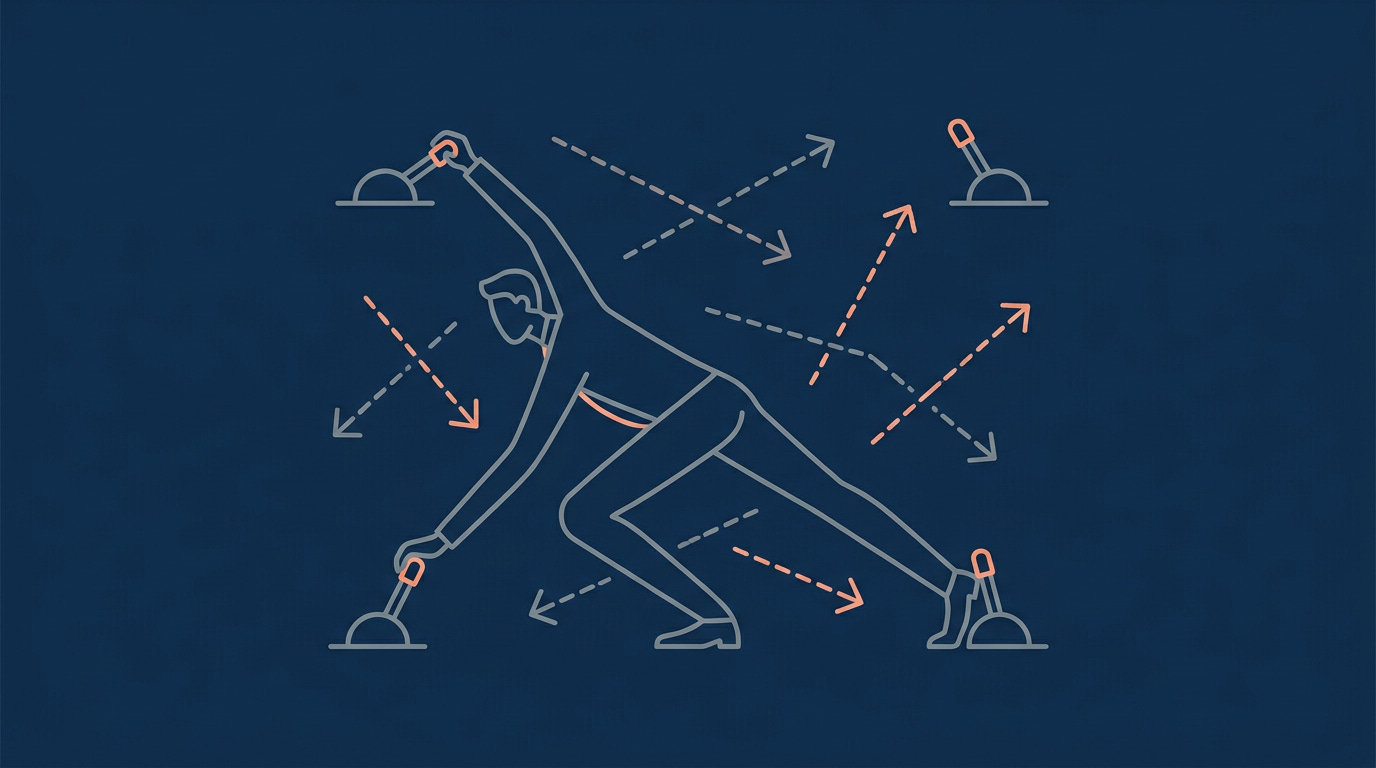
Chasing all four models at once: motion without movement.
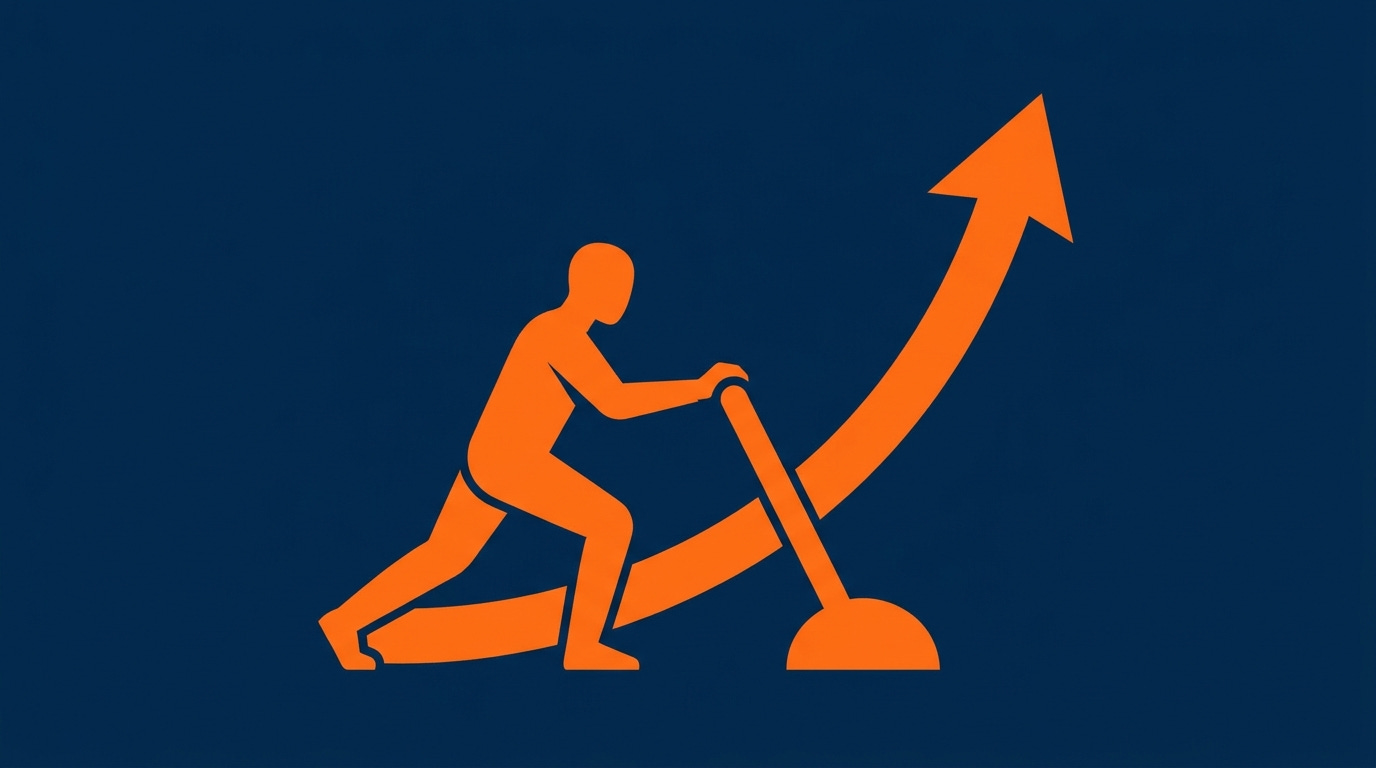
One model, run to cash flow: the number actually moves.
The sequence that works
If you are starting from zero, here is the order that has worked for hundreds of operators — the same one I break down in the full rental arbitrage guide. Do not skip a step.
Pick one market and learn it. Not five. One. Find the zip codes where a two-bedroom clears $4,000+ in monthly gross. Costs nothing but two to three weeks.
Model one unit before you talk to a landlord. Rent, utilities, cleaning, 15% platform fees, a 10% vacancy reserve. If it does not clear $1,500 net at 65% occupancy, do not sign.
Sign one lease. Get one unit live. Furnish for $6K–$9K, pay for real photography, price 15% under comps to build reviews fast, then adjust up.
Reinvest cash flow into unit two. Only after unit one has produced three straight months of positive cash flow at your projected numbers.
Systematize before unit five. Cleaning rotations, dynamic pricing, automated guest messaging — in place before the volume, not after.
⚡ The number that matters: net cash flow per unit per month, tracked weekly, in one place. I have watched operators celebrate a $6,000 booking month while running a $600 loss because they never tracked expenses per door. Gross revenue hides losses.
Common questions about the four models
How much do I need to start rental arbitrage? Per unit, $8K–$15K all in — deposit, first month, furnishing, operating cash. To replace $6,000 a month you need three to four units, so $32K–$60K total.
Do I have to own property? No. You lease it from a landlord on a standard long-term lease. No mortgage, no waiting for appreciation. The landlord owns the asset; you operate the income stream.
Is rental arbitrage legal? It depends on local short-term-rental rules and your lease. Check the ordinance and confirm the lease permits subletting3 before you sign. A due-diligence step, not a dealbreaker.
Ready to build cash flow first?
If you would rather not guess which model fits your capital and timeline, that is exactly what a strategy call is for — we put your real numbers on the table and name the sequence to run first.
• • •
P.S. — The model with the lowest visible barrier usually has the lowest ceiling. Start with the math, not the marketing.
Cashflow Diary Direct — one shipped idea a week for operators who would rather build cash flow first than chase every model at once.
CashFlow Diary has trained short-term-rental operators through its courses, coaching, and community since 2013; the 10,000+ figure reflects cumulative students across those programs.
Episode count reflects the CashFlow Diary podcast catalog to date; the figure is approximate and grows over time.
Short-term-rental legality varies by municipality and lease. Confirm local ordinances and that your lease permits subletting before signing; some landlords require specific lease language.