


Want your own June 18th story? Book a free strategy call — one conversation, no pitch. We find where the leak is, what's blocking you, and your exact next move. You leave with the diagnostic in hand.
Hey,
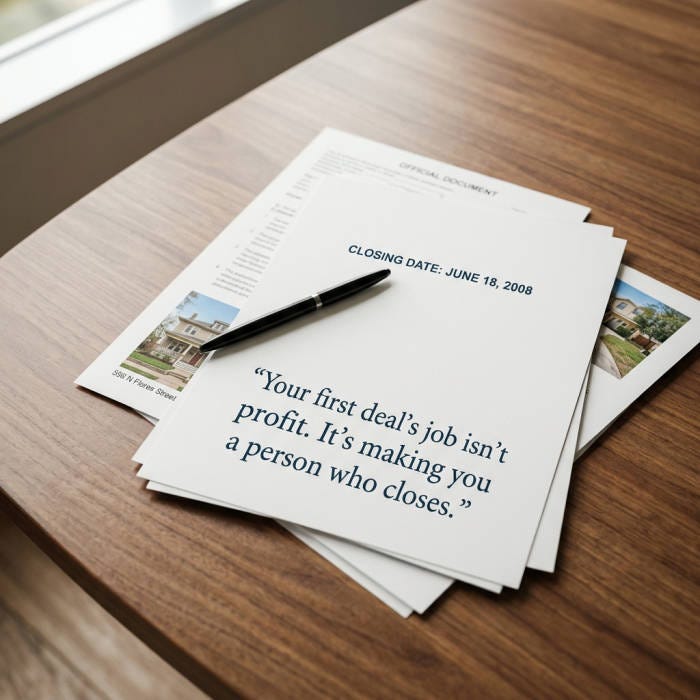
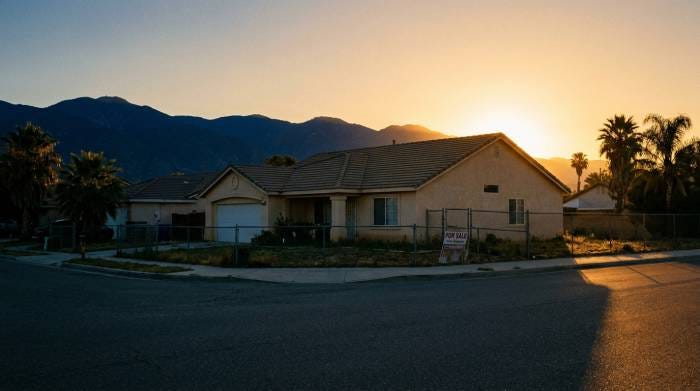
June 18, 2008. I closed on 596 North Flores Street in San Bernardino, California.
Credit score: 398.1 No cash to close, so I had to find private capital. I didn't know what escrow was — I learned the terminology in real time while the paperwork sat in front of me. And the house I was living in? Bank-owned. I was squatting in a foreclosure while buying a property out of foreclosure.
Three months later, Lehman Brothers collapsed. Foreclosure filings swept the country at a rate 81 percent higher than the year before.2 Housing prices dropped more than 20 percent from their peak. I started in real estate at what conventional wisdom called the worst possible time.
Eighteen years later, that deal is old enough to vote. I'm still here. And the reason has nothing to do with timing.
I've spent 15+ years in this space, trained more than 10,000 operators through CashFlowDiary, and recorded 237+ podcast episodes breaking down the deals that work and the ones that don't. The pattern below shows up in every cycle.
• • •
The Deal Closed Because I Had No Exit
Before the deal, I need to tell you what was around it. No college degree. Not enough money to eat consistently. People told me to go back to school or get a job. Those options didn't fit, and I knew it — I just didn't know why yet.
What I knew: I needed a shut-up check. Not a fortune. Not a portfolio. A check that would quiet the noise in my head and give me enough credibility with the people around me that they'd let me take care of my family.
When that closing finished, it felt like an out-of-body experience. Underneath it ran one irrational thought: somebody's going to find out I'm squatting in bank-owned property and come take this from me. Too good to be true. Not for someone like me.
But it closed. And here's what I understand now that I didn't then: the deal didn't close because the conditions were right. It closed because I didn't have another option. I needed to eat. So I moved.
“Comfort kills dreams long before failure does.”
— J. Massey, CashFlowDiary
Your First Deal's Job Isn't Profit
The property at 596 North Flores was in rough shape. The numbers weren't clean. I made mistakes — some I paid for in time, some in money. The first deal was not a masterclass in execution.
What it was: the thing that made me a person who closes.
That identity shift is the real asset from a first deal. Not the cash flow. Not the equity. The transformation from someone who studies real estate to someone who operates it. Before that closing, I was someone who was trying. After it, I was someone who had done it. Those are different people, with different relationships to the next decision.
By the time I bought my second property, I wasn't guessing. I had systems — not because I was smarter, but because I had run one address. Not studied it. Run it.
And here's the part most people miss: I'd seen the blueprint before, even if I didn't recognize it. Before real estate, I sold on eBay — things I sourced from garage sales for $5 and moved to a market where they were worth more. The seller got what they wanted. The buyer got what they wanted. I contributed knowledge and the willingness to move an asset between two markets that weren't talking to each other. A property sitting in foreclosure wasn't reaching the market that needed it. Same logic. Different canvas. Whatever you've already done — sales, service, sourcing, fixing — there's a version of that blueprint in you right now.

What Waiting Actually Costs
The question beginners ask: “What if I buy the wrong deal and lose everything?”
The question operators learn to ask: “What does waiting cost me in compounding experience, equity, and income?”
💡 Key reframe: Nearly 70 percent of first-time real estate investors never close a single deal — not because the market is too hard, but because preparation becomes a permanent state. The first deal's job is to end that state.
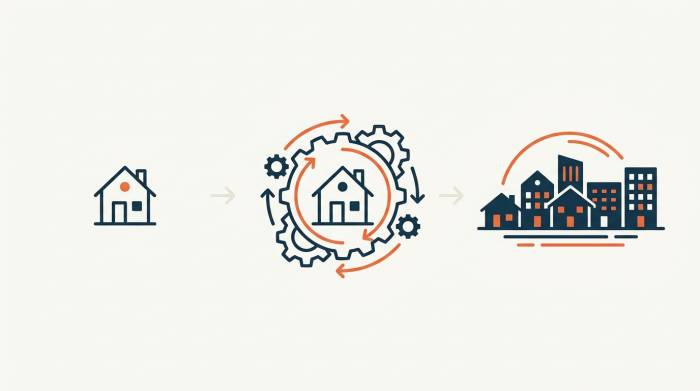
One address became a system. The system became a portfolio. The portfolio became a company that now reaches 19,000+ subscribers. All of it traces back to one closing on one foreclosed property in San Bernardino in 2008.
⚡ The math operators skip: The cost of a bad first deal is measured in months. The cost of no deal is measured in years. Waiting doesn't protect you from mistakes — it protects you from compounding.
If I'd waited for the right time, I would have lost years. The skills built at 596 North Flores became the foundation for the next property, and the next, and every system I've built since. The sequence matters more than the timing. Always.
The 30-Day First-Move Sequence
You don't need perfect conditions. You need a sequence. Here's the one I give operators who are stuck in study mode:
Week 1 — Pick one market and one model. One city, one strategy (start with rental arbitrage if you have no capital — it's the same move-an-asset-between-markets logic I ran on eBay before real estate). Stop comparing twelve options.
Week 2 — Have five capital conversations. Private capital comes from people who want returns their bank account won't give them. You bring the deal and the execution; they bring the funds. You're not asking for money — you're describing an opportunity.
Week 3 — Run real numbers on ten properties. Not browsing. Underwriting. By number ten you'll know what a workable deal looks like in your market — that pattern recognition is what study mode never gives you.
Week 4 — Make one written offer. It probably won't get accepted. That's fine. The person who has made an offer is a different operator than the person who hasn't. That's the identity shift starting.
I broke down why operators learn this sequence in the wrong order in the companion piece below — if you read one more thing this week, make it this:
The $2.8M Property vs. the $0 Down Operator

Why most STR operators are learning the right business in the wrong order
Common Questions About Closing Your First Deal
Do I need good credit to close my first real estate deal?
No. I closed at 398. You need private capital or creative financing, not a FICO score. The operator matters more than the credit report.
Should I wait for a better market?
No. I started during the 2008 collapse. The sequence matters more than the timing — waiting costs you years of compounding experience and systems development.
What if my first deal goes wrong?
You're not buying perfection. You're buying the identity shift from someone who studies to someone who operates. Bad first deals cost months. No deal costs years.
Ready to Close Your Own 596 North Flores?
If you're ready to map your first deal — or your next one — let's find where the leak is, what's blocking you, and what the next move is. One conversation. No pitch. You leave with the diagnostic and the next step.
• • •
P.S. The whole thing started because I was trying to eat. Somewhere inside that survival, a blueprint got built that other folks are now living off of. Your version of 596 North Flores is closer than you think. Start.
You're receiving this because you subscribed to CashFlowDiary — real numbers, real systems, real estate. Eighteen years of deals, broken down weekly.
Ready for the next step? Here's exactly what working together looks like:
Work with J.
Eighteen years of deals. 10,000+ operators trained. One conversation to map your next move.
Yes, 398. I keep the exact number because it permanently ends the “I need good credit first” objection.
RealtyTrac's year-end 2008 report counted 3.1 million U.S. foreclosure filings — up 81 percent over 2007, the year I closed.