



Hey,
This is Part 5 of a 7-part series on a real revenue rebuild for a luxury short-term rental. [Part 1](https://cashflowdiary.substack.com/p/your-property-has-1-revenue-line) mapped the revenue lines. [Part 2](https://cashflowdiary.substack.com/p/mpi-the-one-number-that-tells-you) gave you MPI. [Part 3](https://cashflowdiary.substack.com/p/the-7-stations-why-your-guests-leak) mapped the stations. [Part 4](https://cashflowdiary.substack.com/p/the-940night-setting-nobody-checks) drained the free leaks. Now we build. Details anonymized. Numbers real.
The $2M Hudson Valley estate in this series sold 48 nights in its first 51 days of data — and paid its platform $6,052.59 in host service fees for them.
That's an effective 15.50%, verified to the penny across every booking. Not a listing mistake, not a setting. The structural price of renting 100% of your demand from one company.1
This issue is the math of paying less for the same guest — and the honest version, including where direct booking is oversold.
I've spent 15+ years in this space, trained more than 10,000 operators through CashFlowDiary, and recorded 237+ podcast episodes breaking down the deals that work and the ones that don't. Channel economics is where operators either build equity or rent it forever.
• • •
The fee you can't negotiate — and the one you can choose
If you run property-management software, Airbnb's single fee applies: 15.5%, all of it out of your payout, no opt-out. That's the baseline.
Now the alternative. A direct booking site through the property's own PMS — Hospitable Direct on its recommended plan — costs the host 3%, with the guest paying 4% and payment processing included.
Same guest. Same nights. Same house. 12.5 percentage points less to the middle layer — about $287 back on this property's average booking.
What 12.5 points is worth in a year
Two numbers, and the difference between them matters:
The ceiling: ~$9,800 a year. That's 12.5 points on this property's roughly $78K trailing-year gross — if every dollar shifted direct. It won't. Nobody's does. Anyone selling you that number is selling.
The realistic Year-1 blend: ~$3,600. A defensible first-year mix — half Airbnb, a fifth Vrbo, a fifth direct + Google, a tenth premium OTA — takes the effective commission from 15.5% to roughly 10.9%. That's the number to build a plan on, and it grows every year the direct share climbs.
💡 The bigger prize isn't the fee. Every direct booking also hands you the guest relationship — the email, the ability to rebook them at full margin forever. Part 3 readers already know: that's Stations IV, VI, and VII compounding.
The three flavors of "direct" — and the one that wins
Hospitable Direct comes in three models, and owners routinely pick the wrong one:
Basic — host pays 1% + your own Stripe ≈ 3.9% · recovers 11.6 pts
Premium split (the default) — host pays 3%, guest pays 4% · recovers 12.5 pts
Premium host-only — host pays 7% · recovers 8.5 pts
The split model beats host-only by $32.10 per booking on this property — and it's the one that includes chargeback protection, guest vetting, and $5M damage coverage. On a 16-person, $4,000+ booking, those protections matter far more than they do on a studio. Cheaper and safer is rare. Take it.
The 0% channel hiding behind the 3% channel
Here's the part that turns one build into two channels: Google's vacation rental surface lists properties for free — no commission on referrals or bookings — but only if you have a working direct booking site to send travelers to.
The entry gates are minor: five-plus photos (use twenty), no watermarks, accurate calendar and pricing. The case study property had this channel already configured and inert — because its direct site was the broken "0 bedrooms" page from Part 4. Fix the page, flip the switch, and the only 0%-commission demand surface in existence starts working.
Why single-channel is a risk, not just a cost
The fee math gets the attention. The risk math should.
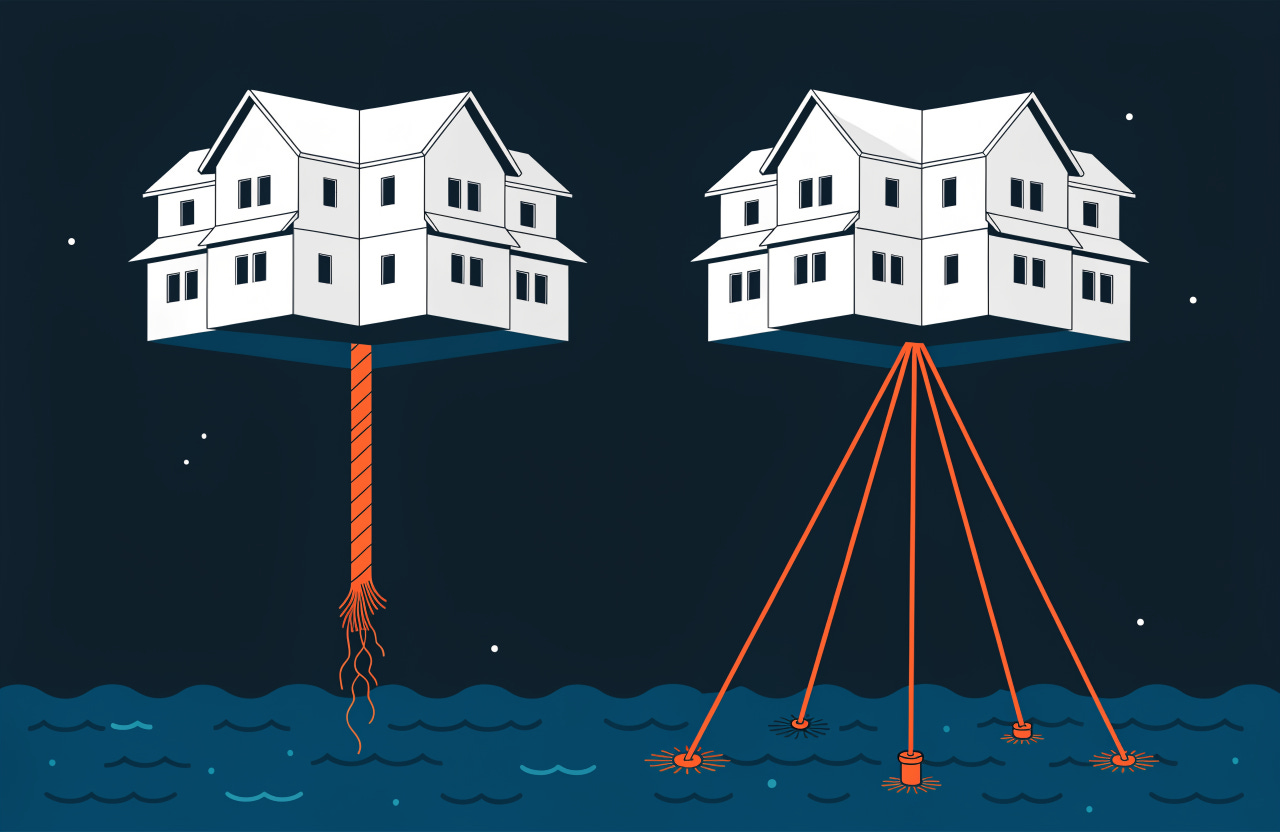
At 100% Airbnb, one algorithm change, one suspended listing, one policy shift is a 100% revenue event. Diversification is the fix, and the additions aren't equal:
Vrbo is the fee-efficient add — around 5% PMS-connected, and its platform data claims materially larger group bookings and longer lead times than Airbnb like-for-like, with a strong share of rural-market bookings. Take the exact platform-published percentages with salt; the direction is what matters. A large-group rural estate is Vrbo's home turf, and its ~48-day booking window directly attacks this property's biggest measured weakness: almost nothing on the books beyond 30 days.
Booking.com is a demand add, not a fee play. Around 15% commission plus payment fees — roughly Airbnb money, sometimes worse. You list there for reach and midweek international demand, not savings. Going in expecting a discount is how owners sour on diversification.
The wedding marketplaces are the sleeper. The Knot, WeddingWire, Zola. Not as a venue — as where the wedding party sleeps. Every regional venue that hosts a 200-person wedding creates 200 people who need beds nearby, and almost no estate publishes a page built for that search. More on the setup below the line.
So: 15.5% is the price of one channel. The blend costs 10.9% and falls every year. The question left is the one that actually stops owners — how do you set this up without becoming a web developer and a tax accountant?
Below the line: the build order, the two-layer site architecture, the tax registration nobody warns you about, and the legal documents that replace Airbnb's terms of service.
